
A new AC system can feel like a quick purchase when the old one stops cooling on a 92-degree afternoon. In South Florida, though, air conditioner installation Broward County homeowners and businesses can depend on requires more than replacing one metal box with another. The right system has to manage intense heat, long cooling seasons, heavy humidity, and the demands of your particular building.
A properly planned installation can improve comfort room by room, reduce unnecessary energy use, and help protect the equipment from premature strain. A rushed installation can do the opposite, even when the new unit is high efficiency. That is why the evaluation behind the equipment choice matters as much as the equipment itself.
Why Broward County AC Installation Requires a Local Approach
Broward County air conditioners work harder and longer than systems in many parts of the country. Heat is only part of the workload. Humidity makes indoor air feel warmer, can leave rooms clammy, and places a greater demand on the system’s ability to remove moisture.
That changes how a system should be selected. A unit that is too small may run constantly and struggle to reach the set temperature. A unit that is too large may cool the air quickly but shut off before it has removed enough moisture. The result can be a cold-but-sticky home, uneven temperatures, higher utility costs, and more frequent cycling.
The best choice depends on the property. A shaded single-family home with newer windows has different cooling needs than a west-facing condo, a restaurant with heat-producing equipment, or an office with many occupants. Layout, ceiling height, insulation, sun exposure, window condition, ductwork, and the number of people using the space all affect the recommendation.
Start With a Real Load and Airflow Assessment
Square footage is a useful starting point, but it should never be the entire sizing method. Proper air conditioner installation in Broward County starts with a technician looking at how the building gains and loses heat, along with how air moves through it.
A thorough assessment considers the condition and layout of the ducts, return-air capacity, insulation, existing vents, and areas that are consistently too warm or too humid. In commercial settings, operating hours, occupancy, kitchen equipment, server rooms, and door traffic may also change the calculation.
This process can uncover a problem that a new condenser alone will not fix. For example, a master bedroom that never cools may have an undersized supply run, a poorly located return, or duct leakage in a hot attic. Replacing the AC without addressing airflow may leave the same comfort complaint in place.
Equipment Capacity Is Not the Same as Comfort
Higher capacity is not automatically better. Oversizing is a common temptation when a property feels hot, especially after an older unit begins failing. But an oversized system can short-cycle, which means it turns on and off more often than it should. That reduces dehumidification and can increase wear on components.
The goal is balanced performance: enough capacity to cool on the hottest days, sufficient runtime to control humidity, and properly designed airflow to deliver conditioned air where people need it. A licensed HVAC professional should explain why a particular capacity and system type fit your property instead of offering a one-size-fits-all package.
Choose Efficiency for the Way You Use the Building
Energy efficiency ratings matter in South Florida because cooling costs can make up a large portion of a utility bill. However, the highest-rated model is not always the best value for every homeowner or business owner.
A higher-efficiency system may make sense for a property that is occupied most of the day, has high cooling costs, or is likely to keep the equipment for many years. Variable-speed equipment can also provide steadier temperatures and improved humidity control because it can adjust output rather than repeatedly operating at full capacity.
On the other hand, the added upfront cost may not be the right fit for every rental property, seasonal residence, or building with near-term renovation plans. Honest recommendations weigh installation cost, expected operating savings, warranty coverage, repair considerations, and how long you plan to own the system.
Ductwork, Drainage, and Electrical Work Are Part of the Job
An AC installation is a system project, not simply an equipment swap. New equipment should be matched to the existing duct system, refrigerant lines, electrical components, thermostat controls, and condensate drainage setup.
Duct issues deserve particular attention. Leaky, crushed, dirty, or poorly sized ducts can waste cooled air and create uneven temperatures. In some homes, duct cleaning or repairs may be appropriate before installation. In others, a redesigned return or an added supply vent may offer a more meaningful comfort improvement than a larger AC unit.
Condensate drainage is equally important in Broward County’s humid climate. Air conditioners remove substantial moisture from indoor air, and that water must drain reliably. A poorly pitched or clogged drain line can lead to shutdowns, ceiling damage, microbial growth, or water around the indoor unit. Installing a properly protected drain system and testing it before the job is complete helps prevent avoidable service calls.
Electrical safety and local code compliance should also be handled by qualified professionals. Licensed and insured technicians verify that disconnects, breakers, wiring, equipment clearances, and mounting meet applicable requirements. This protects the property, supports safe operation, and matters when selling, leasing, or insuring a building.
What a Professional Installation Visit Should Include
A clear process gives property owners confidence and prevents surprises. Before work begins, you should receive a straightforward estimate that identifies the recommended equipment and the work included. Ask whether the scope accounts for duct modifications, new lines, electrical updates, drain work, permits when required, thermostat installation, and removal of the old equipment.
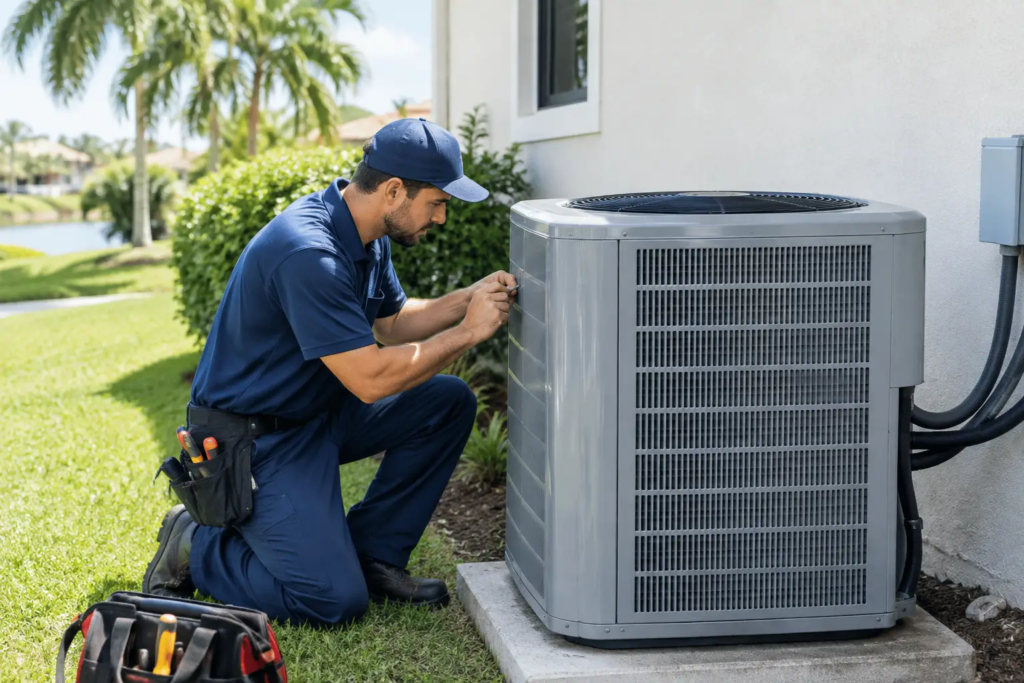
During installation, technicians should protect work areas, install the equipment according to manufacturer requirements, and check key connections instead of relying on appearance alone. Refrigerant charging should be verified with the appropriate measurements, not guessed. The system should then be tested for cooling performance, airflow, thermostat operation, drainage, and safe startup.
Before the crew leaves, homeowners and facility managers should know how to operate the thermostat, replace or check filters, recognize a drain issue, and schedule maintenance. The best handoff is practical, not rushed.
When Replacement Makes More Sense Than Another Repair
There is no single repair bill that automatically means replacement is the right answer. The decision depends on the system’s age, repair history, efficiency, refrigerant type, and overall condition. A relatively new system with an isolated repair may be worth fixing. An older unit with recurring compressor, coil, electrical, or refrigerant problems may be nearing the point where additional repairs no longer offer good value.
Comfort is part of the equation too. If your system runs constantly, leaves moisture indoors, creates major temperature differences between rooms, or cannot keep up during normal summer weather, a replacement evaluation is reasonable even if the unit still turns on.
For businesses, replacement planning can prevent a failure from disrupting employees, customers, inventory, or tenants. Scheduling a planned installation is usually less stressful than making a decision during an emergency outage.
Protect the New System After Installation
Even excellent equipment needs regular care. Change filters on a schedule that fits the building and filter type, keep the outdoor unit clear of leaves and debris, and avoid closing too many supply vents. A preventative maintenance visit can identify loose electrical connections, drainage concerns, dirty coils, airflow restrictions, and early wear before they become urgent failures.
For homes with persistent dust, odors, allergies, or uneven airflow, consider the condition of the ducts and overall indoor air quality. For properties with laundry equipment, dryer vent cleaning is another practical safety service that should not be overlooked.
Premier Cooling LLC brings more than eight years of local experience, licensed and insured technicians, and 24/7/365 availability to installation, replacement, repair, and maintenance decisions across South Florida. With more than 1,200 customers and 250 positive reviews, the focus remains straightforward: recommend what fits the property, explain the work clearly, and help keep the people inside comfortable.
A new air conditioner should give you relief when the heat builds, not create new questions about humidity, hot rooms, or unexpected operating costs. Start with an evaluation that looks at the whole property, then choose an installation plan designed for the way you live or work.
