

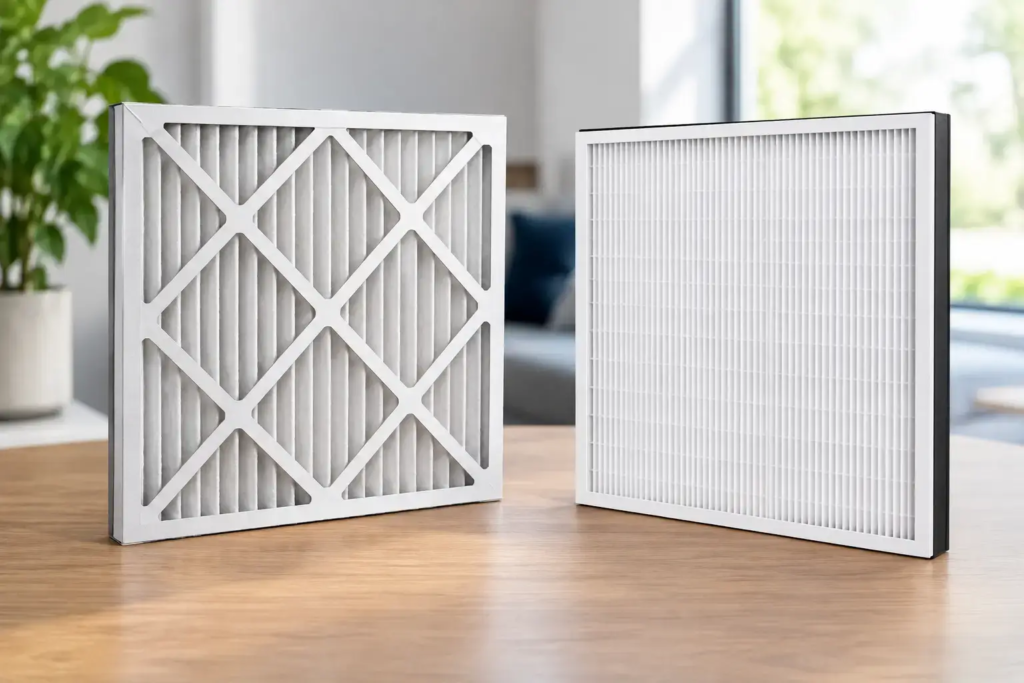
A filter that captures more particles is not automatically the best filter for your AC system. In South Florida, where cooling systems run hard through long stretches of heat and humidity, the MERV versus HEPA decision needs to account for both cleaner air and dependable airflow. Installing a filter that your system cannot handle can leave rooms less comfortable, raise operating costs, and put unnecessary strain on equipment.
For most homes and many small commercial spaces, the right answer is a properly sized MERV-rated filter, changed on schedule. HEPA filtration can be an excellent solution in the right setup, but it is usually not a simple swap for the filter at your return grille.
MERV Versus HEPA: What Is the Difference?
MERV stands for Minimum Efficiency Reporting Value. It is a rating system that indicates how effectively an air filter captures particles of different sizes. Residential HVAC filters commonly range from MERV 8 to MERV 13, while higher-rated filters are often used in specialized commercial, medical, or engineered filtration systems.
HEPA stands for High-Efficiency Particulate Air. A true HEPA filter must capture at least 99.97% of particles that are 0.3 microns in size under standardized testing. That level of filtration is far beyond what a typical fiberglass or basic pleated HVAC filter provides.
The key difference is not simply that HEPA is “better.” HEPA filters are much denser, which creates more resistance to airflow. Most residential central air handlers and many standard commercial systems were not designed to pull air through a true HEPA filter. A MERV rating helps match filtration performance to what an HVAC system can move safely and efficiently.
Why Airflow Matters as Much as Filtration
Your AC system depends on a specific volume of return air moving across the indoor coil. When airflow is restricted, the blower has to work harder. In severe cases, the evaporator coil may get too cold and freeze, reducing cooling and potentially leading to water issues when it thaws.
Restricted airflow can also contribute to hot and cold spots, longer cooling cycles, higher electric bills, and added wear on the blower motor. Those risks matter in Broward County and throughout South Florida, where an AC system may run every day for much of the year.
A higher MERV number generally means more particle capture, but it can also mean more pressure drop. Filter thickness, surface area, duct design, blower capacity, and how dirty the filter becomes all affect the real-world result. A 4-inch MERV 13 media filter may allow suitable airflow in a system that would struggle with a 1-inch MERV 13 filter.
That is why filter selection should never be based on the rating alone. The equipment manufacturer’s recommendations and a technician’s airflow assessment should guide the decision.
What MERV Ratings Mean for Homes and Businesses
MERV ratings are useful because they provide a practical range of filtration choices for central HVAC equipment.
A MERV 6 to MERV 8 filter is often adequate for basic household dust, lint, pollen, and larger airborne debris. These filters typically allow easy airflow, although they may not capture as many smaller particles that can affect sensitive occupants.
MERV 10 to MERV 11 filters offer a middle ground for many homes. They can capture finer dust, mold spores, and some pet dander while remaining compatible with a wide range of properly maintained systems.
MERV 13 filters are often a strong option for households concerned about allergens, fine dust, smoke particles, and improved general indoor air quality. However, compatibility should be confirmed before moving to MERV 13, especially if the system uses a narrow 1-inch filter rack or has known airflow issues.
MERV 14 through MERV 16 filtration is more common in settings with specific air-quality requirements. These filters can be appropriate for certain commercial applications, but they usually require an HVAC design that supports the additional resistance.
For a busy office, retail space, or multifamily property, the best choice may vary by area. A high-occupancy waiting room has different needs from a storage room or private office. A professional assessment can help property managers improve air quality without creating comfort complaints or equipment problems.
When a HEPA Filter Makes Sense
HEPA filtration can be valuable for people with severe allergies, asthma, respiratory sensitivities, or heightened concerns about airborne particles. It is also common in healthcare environments, laboratories, clean spaces, and certain commercial applications where a high level of particle control is required.
In a typical home, though, a portable HEPA air cleaner is often the most practical way to add true HEPA filtration. It can be placed in a bedroom, nursery, home office, or another room where cleaner air is most needed. This approach does not force the central AC system to overcome the resistance of a whole-house HEPA filter.
A whole-home HEPA system can work, but it generally requires dedicated equipment, a bypass arrangement, or HVAC components designed to accommodate it. It should be planned as part of an indoor air-quality upgrade, not installed as a quick replacement for a standard return filter.
HEPA also does not solve every indoor air concern. Filters capture particles, but they do not directly control humidity, remove all odors or gases, repair leaky ductwork, or eliminate the source of mold growth. In South Florida, maintaining indoor humidity at an appropriate level is a major part of creating a healthier, more comfortable home.
Choosing the Right Filter for South Florida Conditions
Start with your current system. Check the filter size, the manufacturer guidance, and the condition of the return ductwork and air handler. If you have noticed weak airflow, rooms that stay warm, frequent coil freezing, or a whistling return grille, moving to a denser filter without an inspection is not a good idea.
For many South Florida households, a quality pleated MERV 8 to MERV 11 filter is a sensible baseline. A compatible MERV 13 filter may be worthwhile for homes with pets, allergy concerns, frequent outdoor dust, or occupants who want stronger fine-particle filtration.
Your replacement schedule matters just as much as the rating. A filter that is overloaded with dust restricts airflow regardless of its original MERV level. Most 1-inch filters need attention every one to three months, but homes with pets, ongoing remodeling, heavy AC use, or multiple occupants may need more frequent changes. Thicker media filters can often last longer, depending on their design and the system’s use.
Do not assume that a clean-looking filter is working properly, either. Fine particles can load a filter without producing an obvious gray surface. A maintenance visit is a good opportunity to verify static pressure, inspect the coil, and make sure the filter cabinet seals correctly. Air that bypasses the filter can carry dust directly into the equipment.
Other Ways to Improve Indoor Air Quality
The MERV versus HEPA question is only one part of the picture. Better indoor air often comes from several measures working together: proper filtration, clean coils, sealed ducts, controlled humidity, and consistent maintenance.
If dust returns quickly after cleaning, rooms smell musty, or family members experience ongoing allergy symptoms indoors, the issue may not be the filter alone. Dirty ductwork, drainage problems, inadequate ventilation, and moisture around the air handler can all affect comfort and air quality.
Premier Cooling LLC can evaluate system airflow, filter compatibility, humidity concerns, and equipment condition before recommending an upgrade. That approach helps homeowners and business owners avoid paying for filtration that looks impressive on paper but does not fit their HVAC system.
A filter should protect your air and your equipment at the same time. Choose the highest practical level of filtration your system is designed to handle, keep it changed, and have airflow checked when comfort or air-quality concerns persist.
