

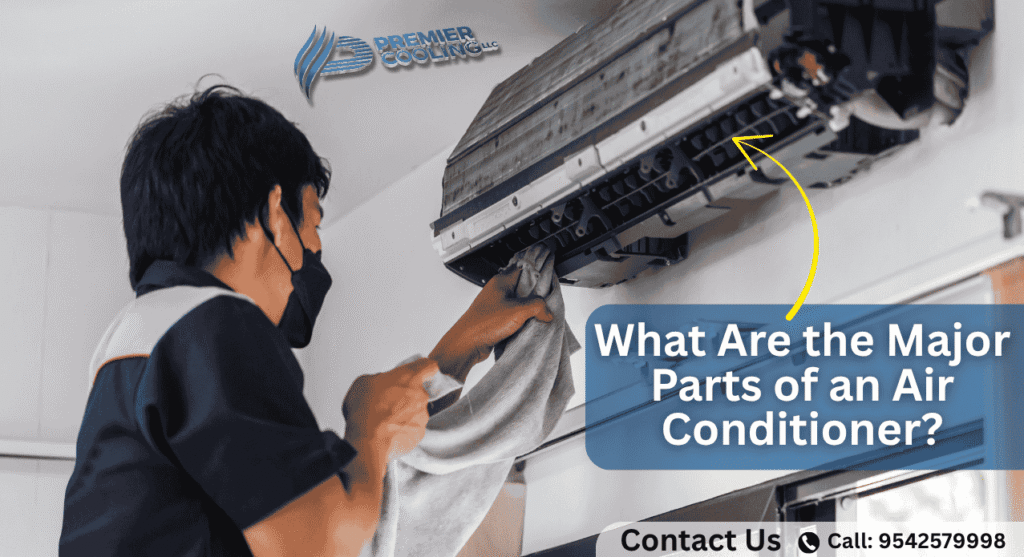
What Are the Major Parts of an Air Conditioner?
Wouldn’t it be interesting to know the major parts of an air conditioner repair or maintenance? Each component plays a very important role in the cooling cycle to provide efficient performance and comfort. Here’s a detailed explanation of the major parts: An air conditioner is a complex system composed of several key components that work together to cool indoor air, extract humidity, and maintain the right environment. Being familiar with these major parts will help you maintain your AC unit better and detect any potential issues early. Below are the main components of a typical air conditioning system for repair and maintenance:
1. Compressor
The compressor is commonly referred to as the “heart” of an air conditioning system. It is located in the outdoor unit and compresses the refrigerant gas to a high pressure and temperature so that it can be heat exchanged in the condenser. Without the compressor, the refrigerant cannot flow through the system.
Function:
- Compresses and moves refrigerant through the system
- Increases the pressure and temperature of the refrigerant gas
2. Condenser Coil
The expansion valve is a small device located between the condenser and evaporator coils. It regulates the flow of refrigerant into the evaporator coil. Reducing the pressure of the refrigerant allows it to expand and cool before entering the evaporator.
Function:
- Releases heat to the outside
- Converts refrigerant from gas to liquid
3. Evaporator Coil
The evaporator coil, in contrast, is typically housed within the indoor unit or air handler, absorbing heat from the indoor air. The liquid refrigerant—cooled by something back in the outdoor unit—passes through the coil, evaporates, and absorbs heat from the air blowing across the coil, thereby cooling the air before it is sent inside the building.
Function:
- Absorbs heat from indoor air
- Allows refrigerant to evaporate and cool the air
4. Expansion Valve or Metering Device
The expansion valve is a small device located between the condenser and evaporator coils. It controls the amount of refrigerant flowing into the evaporator coil so that the pressure in the refrigerant is reduced, thus allowing the refrigerant to expand and cool as it enters the evaporator.
Function:
- Regulates refrigerant flow
- Reduces pressure to enable cooling
5. Air Handler / Blower
The air handler, otherwise called a blower, is at times incorporated with the indoor unit. It contains a set of fans blowing air over the evaporator coil and then sending it into the house or building through three ductworks.
Function:
- Circulates indoor air
- Pushes cooled air through ducts to rooms
6. Thermostat
The thermostat is the control center of the air conditioning system, letting the user set the desired temperature and communicating to activate or deactivate the AC unit as needed to keep up with room temperature.
Function:
- Monitors and controls room temperature
- Sends signals to start or stop the cooling cycle
7. Refrigerant
Refrigerants, even though not mechanical parts, are vital to the operation of an AC. Refrigerants circulate through the system, taking away one kind of heat and putting down another to effect cooling. Most commonly used refrigerants include R-410A and R-22 (gradually being phased out).
Function:
- Transfers heat from indoors to outdoors
- Cycles between liquid and gas states during operation
8. Air Filters
Located near the intake vents and inside the air handler are the air filters; these keep dust, pollen, and other airborne particles from circulating through the air and coating the internal parts.
Function:
- Cleans the air entering the system
- Protects internal parts from debris and dust
What Is the Outside Part of an Air Conditioner Called?
The outside segment of an air conditioner is generally called an “outdoor unit,” or a “condenser unit.” Being a necessary step in the air conditioning services process, it expels heat that it has taken indoors from the environment. It forms a counterbalance to the inside unit in order to conclude the cooling cycle.
Key Components of the Outdoor Unit
The outdoor unit contains several major parts that are essential for the functioning of the air conditioning system. Here’s a breakdown of each:
1. Compressor
- Description: The compressor is the core component of the outdoor unit. It compresses the refrigerant gas coming from the indoor unit, raising its pressure and temperature.
- Function: It pumps the refrigerant through the system and enables the heat exchange process. It essentially starts the cooling cycle by converting low-pressure gas into high-pressure gas.
2. Condenser Coil
- Description: A large coil made of copper or aluminum tubing surrounded by metal fins. As the hot, high-pressure refrigerant gas flows through this coil, it releases its heat to the outside air.
- Function: It allows the refrigerant to condense into a liquid by releasing heat, thus cooling it down before it returns indoors.
3. Outdoor Fan
- Description: This fan sits at the top or side of the unit and pulls air through the condenser coil to help dissipate heat more efficiently.
- Function: The fan assists in releasing the absorbed indoor heat to the outside environment by circulating air across the condenser coil.
4. Electrical Components
- Includes: Capacitors, contactors, and circuit boards.
- Function: These manage the power supply, regulate the compressor’s operation, and ensure smooth startup and shutdown of the system.
5. Cabinet / Protective Housing
- Description: The metal casing that surrounds the outdoor unit. It protects all internal components from environmental elements like dust, rain, and debris.
- Function: Ensures the durability and safety of the outdoor unit.
How the Outdoor Unit Works in the Cooling Process
- Refrigerant Cycle Begins: The refrigerant absorbs heat from the indoor air via the evaporator coil.
- Heat Transfer: The heated refrigerant travels through a line set to the outdoor unit.
- Compression & Heat Release: The compressor pressurizes the refrigerant. The condenser coil and fan then release the absorbed heat into the outdoor air.
- Cooling Down: The refrigerant cools and changes into a liquid before it flows back indoors to absorb more heat.
Why the Outdoor Unit Is Important
- Removes unwanted heat from your indoor space
- Maintains the efficiency of the cooling cycle
- Helps control indoor humidity and temperature
- Protects vital components needed for air conditioning to function
Common Names for the Outside Part of an Air Conditioner
- Outdoor Unit
- Condenser Unit
- Condenser
- External AC Unit
Why choose Premier Cooling for air conditioning repair?
Also, getting to know about the Major Parts of an Air conditioner repair & cleaning aids one in maintaining it properly for efficient use. Companies such as Premier Cooling that provide air conditioning repair value knowledge, promptness, as well as client satisfaction. Certified technicians come to bear years of experience diagnosing and dealing with a broad array of AC issues, working with all major brands and models. Being known for their fast and reliable service ensures Premier Cooling responds quickly, Diagnoses correctly, and Repairs efficiently to restore comfort in no time. AC emergencies don’t wait. Call us now 9542579998.
