
A packed Fort Lauderdale office, a busy retail floor, or an occupied multifamily property can become uncomfortable quickly when cooling slips even a few degrees. In South Florida, HVAC equipment does more than provide cold air. It controls humidity, supports indoor air quality, and helps protect daily operations. That is why commercial HVAC maintenance Broward County property managers and business owners schedule is not simply a seasonal task. It is an operating priority.
A maintenance plan gives your system the attention it needs before a small airflow restriction, drain issue, electrical problem, or worn component turns into a disruptive breakdown. It also gives decision-makers a clearer view of system condition, upcoming repair needs, and opportunities to manage energy use without sacrificing comfort.
Why Broward County Commercial Systems Need More Attention
Commercial equipment in Broward County faces a demanding workload. Long cooling seasons, intense heat, high humidity, salt air near the coast, and frequent afternoon storms can all affect performance. Systems may run for much of the day, particularly in offices, restaurants, medical spaces, retail locations, and common areas of multifamily properties.
Humidity is often the hidden issue. An air conditioner can appear to be cooling while failing to remove enough moisture from the air. Occupants may report a sticky feeling, musty odors, condensation around vents, or uneven comfort between rooms. Left unaddressed, excess moisture can contribute to indoor air-quality concerns and place additional strain on equipment.
Commercial properties also have more moving parts than a typical home. Multiple zones, thermostats, air handlers, rooftop units, exhaust systems, and tenant schedules can make a problem harder to spot. A unit serving a lightly used conference room may not show obvious symptoms until it is needed for a full meeting. Regular service catches conditions that daily operations can easily overlook.
What Commercial HVAC Maintenance Should Include
Effective maintenance is more than replacing filters and glancing at a thermostat. The right scope depends on your building, equipment type, occupancy, operating hours, and maintenance history. A restaurant with grease-producing equipment and high kitchen exhaust demands needs different attention than a professional office or a condominium common area.
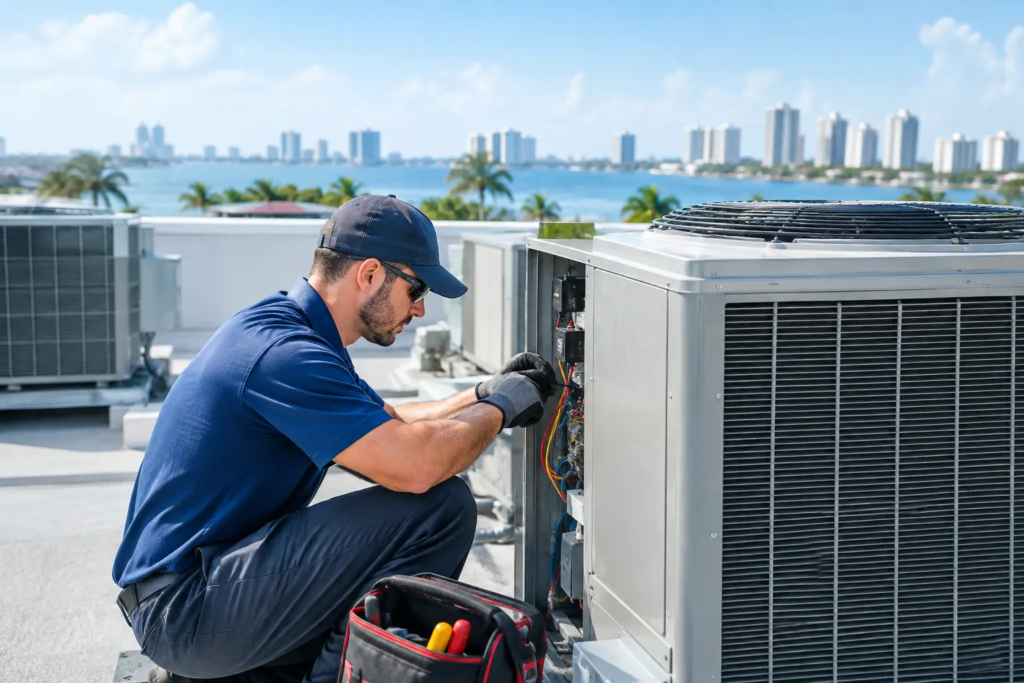
During a commercial visit, a licensed technician should inspect the system’s mechanical, electrical, drainage, airflow, and control components. This generally includes checking filters, coils, blower assemblies, belts where applicable, refrigerant performance, electrical connections, capacitors, contactors, condensate drains, safety controls, and thermostat or building-control operation.
Drainage deserves special attention in South Florida. Condensate lines work hard in humid conditions, and algae or debris can create clogs. A blocked drain can lead to water damage, shutdowns, ceiling stains, and avoidable service calls. Clearing and testing the drain system is a practical step that protects both the HVAC unit and the property around it.
Technicians should also assess airflow rather than assuming a running system is a healthy system. Dirty coils, loaded filters, blocked return paths, failing blower components, and duct leakage can reduce airflow. The result may be hot or cold spots, longer runtimes, higher utility bills, and complaints from tenants or employees.
The Business Cost of Waiting for a Breakdown
Reactive repairs have their place. Even well-maintained systems can fail unexpectedly. But waiting until equipment stops working usually limits your options. A failure on a hot weekday may require emergency service, temporary adjustments for occupants, and a quick repair decision made under pressure.
The direct cost is only part of the picture. An uncomfortable workspace can affect employee focus and customer experience. For businesses that protect inventory, electronics, server rooms, medication, or sensitive materials, unstable temperatures and humidity can become a more serious concern. A water leak from a clogged drain can also create cleanup and repair expenses far beyond the HVAC call itself.
Maintenance cannot guarantee that every repair will be avoided. It can, however, identify weak capacitors, worn contactors, damaged insulation, declining airflow, and coil buildup before those issues create a full shutdown. That extra planning time matters when you need to approve a repair, order a part, or budget for replacement equipment.
How Often Should a Commercial System Be Serviced?
For most Broward County businesses, twice-yearly preventive maintenance is a sensible starting point. One visit before the hottest stretch of the year helps prepare cooling equipment for heavy demand. A second visit later in the year helps address wear from extended operation and confirms the system is ready for the next cycle.
Some facilities need more frequent attention. Restaurants, gyms, medical offices, high-traffic retail spaces, properties with several rooftop units, and buildings with known humidity or air-quality issues may benefit from quarterly service. Systems operating nearly around the clock also need closer monitoring than equipment serving a small office with limited hours.
The best schedule is based on conditions, not a one-size-fits-all package. Equipment age, filter type, number of occupants, renovation activity, nearby construction, duct condition, and prior repair history all matter. A maintenance provider should explain why a recommended interval fits your property instead of overselling unnecessary work.
Signs Your Maintenance Plan Needs Attention
A commercial HVAC system rarely fails without giving some warning. The clues are not always dramatic, which is why managers should encourage staff to report comfort changes early. Repeated thermostat adjustments, rooms that never cool evenly, new rattling sounds, water near equipment, unusual odors, and utility costs that rise without a clear operational reason all deserve a closer look.
Pay attention to recurring service calls as well. If the same unit repeatedly has drain, electrical, airflow, or refrigerant-related concerns, it may need a deeper diagnosis rather than another short-term fix. Ongoing repairs can be the right choice for a newer system with a defined issue. For older equipment with repeated breakdowns, however, it may be time to compare repair costs against planned replacement.
Documenting service findings helps make that decision easier. Keep records of repairs, parts replaced, runtime concerns, filter changes, and tenant or employee complaints. Over time, that record reveals patterns that a single emergency visit cannot.
Commercial HVAC Maintenance in Broward County That Fits Your Property
The value of a maintenance visit comes down to the quality of the inspection and the clarity of the recommendations. You should know what was checked, what was found, what needs attention now, and what can be planned for later. Straightforward communication lets owners and facilities teams prioritize work based on safety, operational risk, comfort, and budget.
Premier Cooling LLC provides licensed and insured commercial HVAC service with recommendations shaped around South Florida conditions, property layout, airflow, insulation, and energy goals. With more than 1,200 customers served, 8+ years of experience, and 250+ positive reviews, the team understands that businesses need prompt answers and practical options, not vague diagnoses or unnecessary upselling.
A dependable partner should also be ready when preventive work is not enough. Equipment can still fail after hours, on weekends, or during a heat wave. Access to 24/7/365 emergency support gives commercial property operators a clear next step when comfort or equipment protection cannot wait.
Better Maintenance Starts With the Right Questions
Before scheduling service, consider where your building experiences the most discomfort, whether utility costs have shifted, how often filters are changed, and which units have needed repeat repairs. Share those details with your technician. They can help focus the inspection on the areas most likely to affect your operations.
If your property has persistent dust, odors, humidity concerns, or weak airflow, the solution may extend beyond the outdoor unit. Air duct cleaning, ventilation review, drainage service, or adjustments to airflow distribution may be part of the right recommendation. The goal is not to add services. It is to address the actual cause of the problem.
A well-maintained HVAC system is easier to budget for, easier to operate, and far less likely to surprise your staff or customers on the hottest day of the year. Schedule maintenance before comfort becomes an emergency, and give your building the steady, efficient cooling it needs to keep business moving.
