

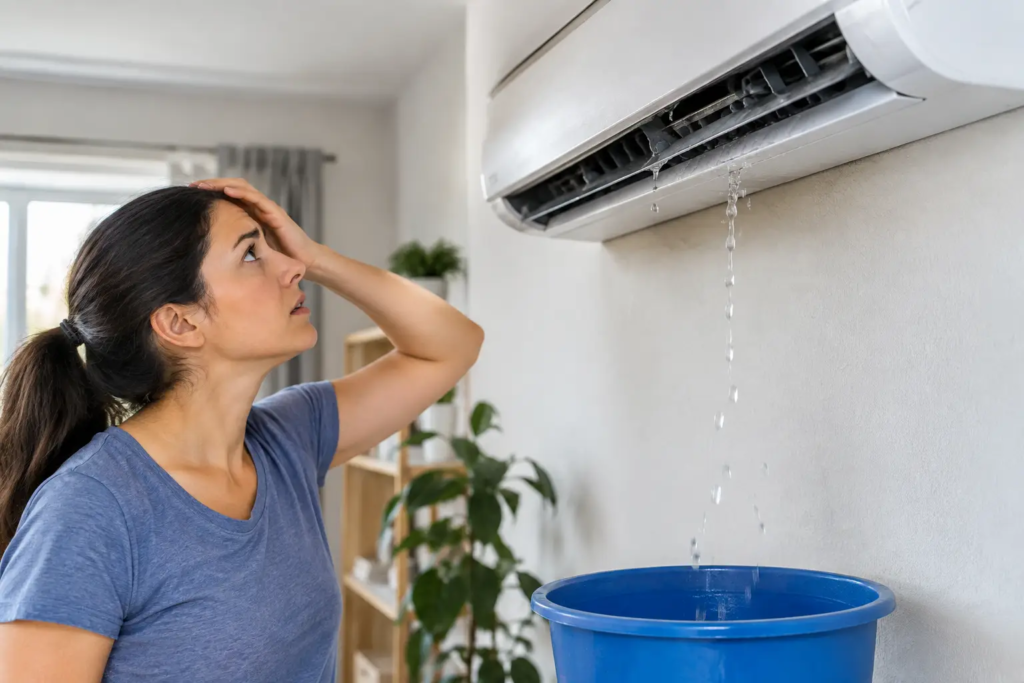
A puddle under an indoor air handler, a brown ceiling stain, or water running from a supply vent can turn a normal South Florida afternoon into an urgent repair call. When an AC leaking water indoors is the problem, acting quickly can protect your drywall, flooring, furniture, and electrical system. The good news is that many leaks begin with a fixable drainage or airflow issue. The bad news is that running the system through a serious leak can make the damage much more expensive.
First, Stop the Water From Spreading
If water is actively dripping from the AC unit, ceiling, or vents, turn the thermostat to OFF. Do not simply raise the temperature setting. Shutting the system down stops additional condensation from reaching an already backed-up drain line or overflowing pan.
Move rugs, electronics, furniture, and valuables away from the wet area. Use towels, a bucket, or a wet/dry vacuum to contain standing water if it is safe to do so. If water is near electrical panels, outlets, wiring, or the air handler’s electrical components, avoid touching the equipment and call a qualified HVAC technician immediately.
For a ceiling leak, place a container beneath the drip. A sagging ceiling can hold a surprising amount of water and may become unsafe. Do not puncture drywall near electrical fixtures or try to remove a ceiling panel without evaluating the risk first.
Why Is Your AC Leaking Water Indoors?
Your air conditioner removes humidity as it cools your home or business. That moisture normally collects on the evaporator coil, drips into a condensate pan, and exits through a drain line. In Broward County’s heat and humidity, that process can produce a significant amount of water every day.
Indoor water appears when that moisture cannot drain correctly, when the coil freezes, or when a component meant to catch and move water fails. The exact cause matters because a quick cleanup alone will not prevent the next leak.
A clogged condensate drain line
A clogged drain line is one of the most common causes of an AC leak indoors. Algae, mold-like growth, dust, rust particles, and debris can build up in the line. Once the blockage prevents water from flowing outside, the drain pan fills and overflows.
Some systems have a safety float switch that shuts off the AC before overflow occurs. If your system turns off unexpectedly and you notice water around the indoor unit, a full drain pan may be the reason. Not every system has a working safety switch, however, especially older equipment or units that have not received regular maintenance.
A damaged or rusted drain pan
The primary drain pan sits beneath the evaporator coil and handles condensation during normal operation. Over time, metal pans can rust, plastic pans can crack, and seams can fail. Many attic installations also have a secondary overflow pan below the unit. If water is dripping through the ceiling, that secondary pan may be full, damaged, or improperly draining.
A drain pan issue often needs more than a patch. Accessing the pan can require removing components around the evaporator coil, so a technician should determine whether repair or replacement is the sounder long-term option.
A frozen evaporator coil
Ice on the indoor coil eventually melts, sometimes faster than the drain system can handle. This can create a sudden indoor leak even if the drain line is partly open. A frozen coil is usually a symptom rather than the root problem.
Restricted airflow is a frequent cause. A severely dirty filter, blocked return vent, dirty evaporator coil, or failing blower motor can keep enough warm air from moving across the coil. Low refrigerant can also cause freezing, but refrigerant does not get “used up” under normal conditions. Low refrigerant generally points to a leak that requires professional diagnosis and repair.
If you see ice on refrigerant lines or the indoor unit, turn the system off and allow it to thaw. Do not chip ice from the coil or continue running cooling to force the issue. Once thawed, the system still needs inspection before returning to normal operation.
A failed condensate pump
Some homes, condos, offices, and commercial spaces use a condensate pump because gravity cannot carry water from the air handler to the drain location. The pump collects water in a small reservoir and pushes it through a discharge line.
If the pump loses power, its float sticks, the discharge tube clogs, or the motor fails, water can overflow near the indoor unit. You may hear the pump running constantly, notice that it is unusually quiet, or see water around its reservoir. This is a service call, particularly when the unit is located in a closet, attic, or finished space where overflow can cause fast damage.
Improper installation or drain-line slope
A condensate line needs the correct slope and trapping arrangement to drain reliably. A line that sags, runs uphill, has an improperly sized trap, or was installed without adequate venting can drain slowly or stop altogether. These problems may show up soon after a new installation, but they can also develop when pipe supports loosen or a property settles.
South Florida systems work hard for much of the year. An installation detail that seems minor can become a major problem when the equipment is producing heavy condensation day after day.
Safe Checks You Can Make Before Calling
Homeowners can perform a few basic checks without dismantling the equipment. Start with the air filter. If it is visibly loaded with dust or has been in place longer than the manufacturer recommends, replace it with the proper size and type. A clean filter supports airflow and helps reduce the risk of a frozen coil.
Next, check visible drain outlets around the exterior of the property. A white PVC pipe near the outdoor unit or an exterior wall may be the condensate termination. Water dripping from this pipe while the AC runs is often normal. No water from the pipe does not automatically mean it is clogged, but it can support that possibility when there is water indoors.
Avoid pouring harsh chemicals, bleach, or drain cleaner into an AC drain line. These products can damage components, create fumes, and fail to remove a stubborn blockage. A technician can safely clear the line, flush it, inspect the trap, and verify that water is draining properly before restarting the system.
When an Indoor AC Leak Is an Emergency
A small amount of water around an accessible air handler should be scheduled promptly, even if the cooling still works. Waiting can lead to microbial growth, damaged insulation, warped flooring, or a ceiling failure. Certain signs call for faster action.
- Water is coming through a ceiling, light fixture, vent, or wall.
- The ceiling is sagging, bubbling, or showing a rapidly growing stain.
- Water is near electrical equipment or outlets.
- The AC is frozen, not cooling, or repeatedly shutting off.
- A business, tenant space, server room, or inventory area is at risk of water damage.
For commercial properties, indoor AC leaks can also create slip hazards and disrupt operations. Facilities managers should isolate the affected area, document visible damage, and arrange service before occupants return to the space if water has reached a walkway or electrical area.
How Technicians Fix an AC Leaking Water Indoors
A proper repair begins with finding the source, not just removing the water. A licensed technician will inspect the filter and airflow, examine the evaporator coil for ice or contamination, test the condensate pump when present, and check both primary and secondary drain pans.
They can clear the drain line using appropriate equipment, confirm the line has proper drainage, and test float switches that protect against overflow. If the coil is frozen, the technician will identify whether the cause is airflow restriction, a blower issue, a refrigerant leak, or another mechanical problem. This distinction matters because clearing a drain line will not solve a coil that freezes again the next day.
The repair cost depends on the cause. Clearing a drain line is generally less involved than replacing a corroded pan, correcting drain-line installation, repairing a refrigerant leak, or replacing a failing pump. Straightforward diagnosis and upfront recommendations help you decide what is necessary now and what may be worth planning for later.
Preventing Future Indoor AC Water Leaks
Preventative maintenance is the most practical way to reduce indoor leaks, especially in South Florida’s long cooling season. Regular service gives a technician the chance to clear condensate drainage, inspect pans and safety switches, check system airflow, and catch coil-freezing conditions before they become a water-damage event.
Between service visits, replace filters on schedule and keep return vents unobstructed by furniture, boxes, or heavy dust buildup. If you have an attic air handler, periodically look for moisture around the unit, rust on the secondary pan, or signs of water staining on the ceiling below. Early detection is far less disruptive than discovering a leak after drywall, insulation, and flooring have absorbed water.
Water where it does not belong is your AC system asking for attention. Turning the unit off, protecting the affected area, and arranging a qualified inspection can keep a manageable drain problem from becoming a costly indoor repair. Premier Cooling LLC provides responsive AC repair and maintenance for South Florida homes and businesses when comfort and property protection cannot wait.
