

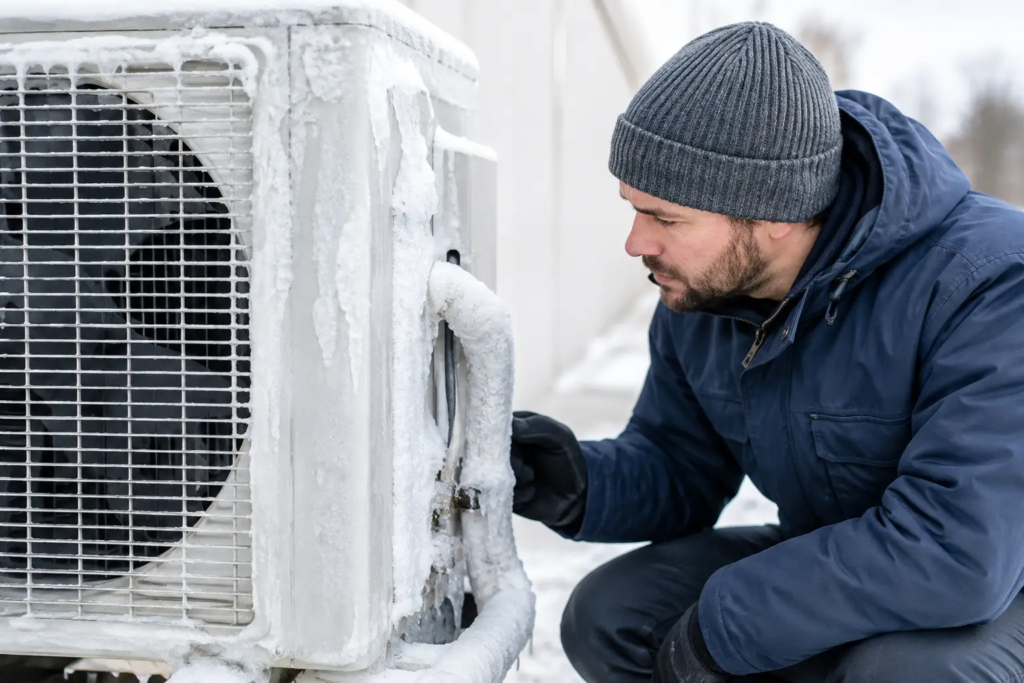
A frozen air conditioner is more than an inconvenience when South Florida temperatures are climbing. If you are asking, “why does AC freeze,” the short answer is that the indoor coil has become too cold and moisture in the air has turned to ice. The longer answer matters because running the system while it is frozen can lead to water damage, poor cooling, and added strain on expensive HVAC components.
You may notice warm air coming from the vents, weak airflow, ice on the refrigerant line outside, or water around the indoor air handler after the ice begins to melt. Turn the cooling system off rather than trying to push through the problem. Then let the system thaw and arrange a professional inspection if the cause is not obvious.
Why Does AC Freeze in a South Florida Home or Business?
Your AC removes heat from indoor air through the evaporator coil inside the air handler. For that process to work correctly, warm air must move steadily across the coil, and the refrigerant pressure must stay within the manufacturer’s operating range.
When airflow drops too low or refrigerant pressure falls too far, the coil temperature can fall below freezing. South Florida’s humidity supplies plenty of moisture, so condensation quickly freezes on the coil. That ice blocks even more airflow, creating a cycle that can cover the entire coil in ice.
A frozen system is not always a sign that the unit is old or needs replacement. Sometimes the fix is as simple as a neglected filter. Other times, the ice points to a refrigerant leak, failing blower component, or ductwork issue that requires a licensed technician.
Restricted Airflow Is the Most Common Cause
Airflow problems are a frequent reason an AC freezes. Your system needs enough return air moving through it to absorb heat from the evaporator coil. When it cannot pull in or circulate enough air, the coil gets colder than it should.
A dirty air filter
A clogged filter is the easiest issue to check. In Broward County, filters can load up quickly because air conditioners run hard for much of the year. Dust, pet hair, construction debris, and everyday household particles reduce airflow as they collect.
Check the filter monthly and replace it according to its condition and the filter manufacturer’s guidance. A filter that looks gray, matted, or visibly dirty should be changed. Installing a filter that is too restrictive for the system can also create problems, so higher filtration is not automatically better without confirming the equipment can handle it.
Blocked vents or closed registers
Closing supply vents in unused rooms may seem like a way to save energy, but it can disrupt the airflow your system was designed to handle. Furniture, rugs, curtains, and stored items can also block return grilles or supply registers.
Keep return vents clear and make sure most supply registers remain open. If certain rooms are consistently too warm or too cold, the answer may be balancing, duct repairs, insulation improvements, or equipment adjustments rather than closing off the rest of the home.
Dirty coils, ductwork, or a blower issue
A dirty evaporator coil can restrict airflow across the coil surface, while a dirty outdoor condenser coil makes it harder for the system to release heat. Leaky, crushed, disconnected, or undersized ducts can reduce the volume of air reaching and returning from rooms.
The indoor blower motor, capacitor, control board, and fan wheel can also affect airflow. A blower that is running slowly or intermittently may be enough to freeze the coil, even if the air conditioner still appears to be operating. These issues need proper testing, not guesswork.
Low Refrigerant Can Freeze an AC Coil
Refrigerant does not get “used up” like fuel. If an air conditioner is low on refrigerant, there is usually a leak or a problem with a component in the sealed refrigerant system.
Low refrigerant changes the pressure inside the evaporator coil. Lower pressure means a lower coil temperature, which allows ice to form. You might also notice longer cooling cycles, reduced comfort, bubbling or hissing sounds, and higher electric bills. However, those symptoms can overlap with other HVAC problems, so they are not a diagnosis on their own.
Adding refrigerant without finding and correcting the leak is a short-term patch that can leave the underlying problem unresolved. A qualified technician should inspect the system, identify the leak where possible, make the appropriate repair, and charge the equipment to manufacturer specifications.
Thermostat and Drainage Problems Can Add to the Issue
A thermostat set extremely low does not usually cause a properly operating AC to freeze by itself. Still, setting the temperature far below normal comfort levels can make an existing airflow or refrigerant problem show up sooner, especially overnight when heat load is lower.
For most South Florida homes, a reasonable setting around 75 to 78 degrees can support comfort and efficiency, though the right setting depends on occupancy, humidity, insulation, and personal preference. If the thermostat is malfunctioning, placed near a heat source, or incorrectly configured, it can cause erratic run times that deserve attention.
Clogged condensate drains do not typically cause the coil to freeze directly, but they often appear alongside freezing problems. When the coil thaws, it can produce a large amount of water. If the drain line or pan is blocked, that water may overflow into ceilings, walls, closets, or equipment areas. Water around the air handler should be addressed quickly.
What to Do When Your Air Conditioner Freezes
The first priority is protecting the system from further damage. Turn the thermostat from Cool to Off. If your thermostat allows it, set the fan to On to circulate room-temperature air across the coil and speed up thawing. Do not restart cooling until the ice has completely melted.
Avoid chipping ice with sharp tools, pouring hot water on the equipment, or opening panels you are not trained to service. You could damage coil fins, refrigerant lines, electrical parts, or insulation. Place towels near the indoor unit if water is dripping, and make sure the area around electrical equipment stays dry.
Once the unit has thawed, inspect the filter and replace it if it is dirty. Confirm that return grilles and supply vents are unobstructed. If the filter was the likely issue and the system resumes normal cooling, keep an eye on its performance over the next day or two.
Call for AC repair if ice returns, airflow remains weak, the system blows warm air, you see water leaks, or you suspect a refrigerant issue. Repeated freezing is never normal. Continuing to run the unit can damage the compressor, which is one of the costliest parts of an air conditioning system to replace.
When Frozen AC Is an Emergency
In South Florida heat, a failed AC can quickly become a health and safety concern for infants, older adults, people with medical conditions, and pets. Businesses may also face uncomfortable customers, disrupted operations, and humidity-related concerns when cooling stops.
Request prompt service when the system will not cool after thawing, there is a burning smell, electrical components are wet, the breaker trips repeatedly, or water is leaking through a ceiling. If you smell something burning or see active electrical damage, turn the system off at the thermostat and use caution around the equipment.
Premier Cooling LLC provides licensed and insured HVAC service with 24/7/365 emergency availability for homeowners and businesses that need help restoring safe, dependable cooling.
Preventing a Frozen AC Before the Next Heat Wave
Preventative maintenance is the best defense against an unexpected freeze-up. During a professional tune-up, a technician can check refrigerant performance, inspect electrical components, clean coils where appropriate, verify drainage, evaluate blower operation, and look for airflow restrictions before they become a breakdown.
Between visits, stay consistent with filter changes, keep outdoor equipment clear of leaves and debris, and avoid blocking indoor vents. If your home has stubborn hot spots, excessive humidity, dusty rooms, or weak airflow, have the full system evaluated. The solution may involve ductwork, insulation, equipment sizing, or indoor air-quality improvements rather than another thermostat adjustment.
A frozen AC is your system’s way of signaling that something is out of balance. Shutting it down early and getting a clear diagnosis can protect your comfort, your property, and your cooling equipment when you need it most.
