

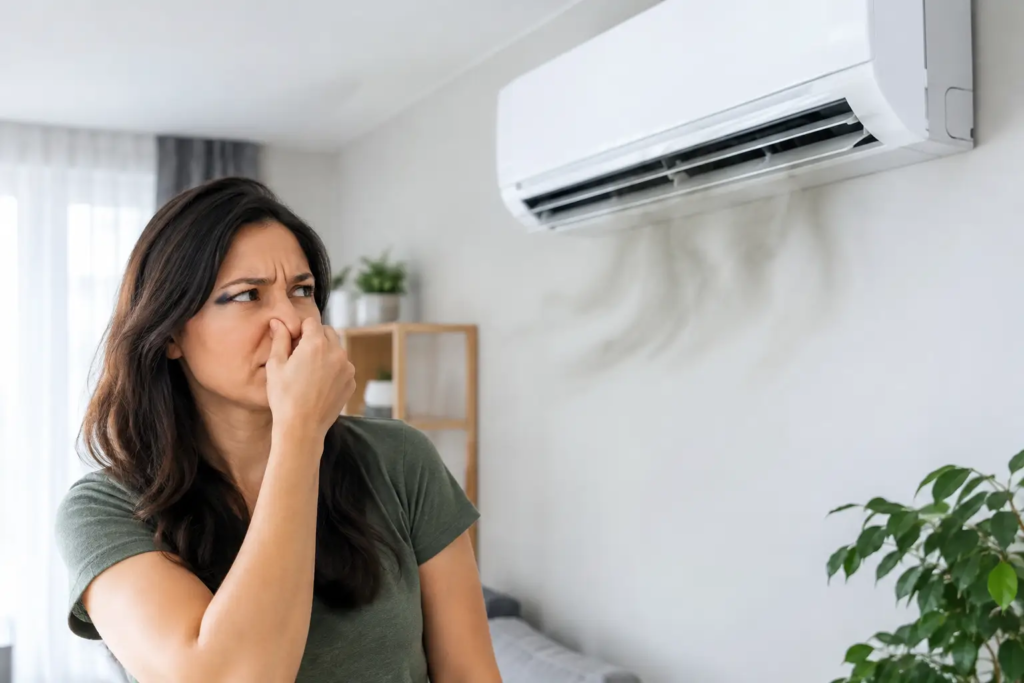
A musty odor from the AC is hard to ignore in a South Florida home or business. If you are wondering why AC smells musty, the short answer is usually moisture. Your air conditioner removes humidity as it cools, and when water does not drain, dry, or circulate properly, mildew and other odor-causing buildup can develop.
That does not automatically mean there is mold throughout your ductwork or that the system needs to be replaced. But it does mean the odor deserves attention. Broward County’s heat and humidity give moisture problems plenty of opportunity to grow, especially when an AC runs for long stretches or sits unused between cooling cycles.
Why AC Smells Musty in South Florida
Your air conditioner moves warm indoor air across a cold evaporator coil. As that air cools, humidity condenses on the coil and drips into a drain pan before leaving through the condensate line. That process is normal and essential for comfort.
The trouble begins when moisture lingers where it should not. Dust, pet dander, and airborne particles can collect on damp components. Over time, microbial growth may create the familiar smell many people describe as damp towels, a basement, or old laundry.
A musty smell may occur only when the system first starts, or it may continue while it runs. That difference can help narrow down the cause, but a trained HVAC technician should inspect the system before assuming the source.
A dirty evaporator coil or drain pan
The evaporator coil is one of the most common sources of musty AC odors. It is constantly exposed to condensation during cooling. If the coil is coated with dust or grime, that damp layer can become a place for mildew to grow.
The same is true of the drain pan below it. A pan that holds standing water, has debris inside it, or does not drain correctly can produce odors that travel through the supply vents. In South Florida, even a small drainage issue can worsen quickly because of the amount of moisture the system handles.
A clogged condensate drain line
Condensate drain lines can clog with algae-like buildup, sludge, dust, or debris. When water backs up, it may sit in the pan or trigger a float switch that shuts down the system. Before that happens, you may notice a musty smell, excess humidity, water near the indoor unit, or a stain around the ceiling below an attic air handler.
A blocked drain line is not a problem to ignore. Beyond the odor, overflow can damage drywall, insulation, flooring, and electrical components. Routine maintenance includes checking that the drain is clear and flowing as intended.
A wet or overdue air filter
A clogged filter does not always cause a musty odor by itself, but it can contribute to the conditions that create one. Restricted airflow allows more dust to settle on the coil and may keep the system from removing humidity as effectively.
If the filter has gotten wet from a drain issue, high humidity, or an improperly installed filter rack, it can hold odors and circulate them through the home. A standard one-inch filter often needs replacement every one to three months, although homes with pets, renovations, or high occupancy may need more frequent changes.
Ductwork with moisture or debris
Ducts can collect dust over time, but odor concerns become more significant when moisture enters the system. Condensation on poorly insulated ducts, air leaks near humid attic or crawlspace areas, and water intrusion can all create conditions for microbial growth.
Duct cleaning is not the answer to every musty smell. If the real problem is a dirty coil or backed-up drain, cleaning ducts alone will not stop the odor from returning. A proper inspection identifies whether the ducts are involved and whether there is an active moisture source that needs repair first.
Indoor humidity that stays too high
An AC should do more than lower the temperature. It should also remove enough moisture to make indoor air feel comfortable. When humidity remains high, homes can feel clammy even with the thermostat set low, and musty odors become more noticeable.
Oversized equipment, short cooling cycles, poor airflow, duct leaks, and thermostat settings can all affect dehumidification. This is why system sizing matters in Fort Lauderdale, Miami, West Palm Beach, and throughout South Florida. The largest system is not always the best system for comfort or moisture control.
What You Can Check Safely Before Calling
Start with the simplest checks. Replace a dirty disposable filter with the correct size and type for your system. Then look around the indoor air handler for visible water, an overflowing drain pan, or damp insulation. If you see water, turn the system off if it is safe to do so and arrange service promptly.
You can also notice where and when the odor occurs. Is it strongest at one vent, throughout the building, only at startup, or after the AC has been off? Those details help a technician diagnose the issue faster.
Avoid spraying fragrances, bleach, or store-bought chemicals into vents or onto the coil. Air fresheners can mask the smell without fixing it, while harsh products can damage components or create indoor-air irritants. Do not remove access panels or try to clear a line if you are not comfortable working around HVAC equipment and electrical connections.
When a Musty AC Smell Needs Professional Service
Schedule an HVAC inspection when the odor persists after replacing the filter, returns repeatedly, or comes with poor cooling, weak airflow, water leaks, unusual noises, or high indoor humidity. Commercial properties should act quickly as well. Odors in offices, retail spaces, or multifamily buildings can affect occupants, disrupt operations, and point to a drainage or ventilation issue that requires timely attention.
A professional visit may include inspecting the evaporator coil, drain pan, condensate line, blower compartment, filter rack, ductwork, and insulation around the equipment. The technician can verify drainage, clean components when appropriate, identify air leaks, and recommend duct cleaning only when conditions support it.
There is a trade-off to keep in mind. A basic drain cleaning may solve an isolated clog at a relatively low cost. If the odor comes from long-term coil buildup, damaged ducts, poor insulation, or equipment that is not controlling humidity properly, the repair may involve more work. Clear findings and straightforward options matter more than a quick guess.
How Preventive Maintenance Helps Keep Odors Away
Musty smells are often preventable because they begin with routine moisture management. Regular AC maintenance gives a technician the chance to clean accessible components, confirm proper drainage, check refrigerant performance, inspect electrical connections, and catch airflow problems before they affect comfort.
Between visits, change filters on schedule, keep supply and return vents clear of furniture, and pay attention to changes in humidity or odor. If the system is in an attic, occasional visual checks for water around the unit can help catch problems early. Property managers can also reduce unexpected service calls by documenting filter changes and seasonal maintenance for each unit.
Premier Cooling LLC provides licensed, insured AC service for homes and businesses across Broward County and the surrounding South Florida area. With more than 1,200 customers served and 24/7/365 emergency availability, the team can help identify the actual cause of an odor rather than simply cover it up.
A musty AC smell is your system’s way of telling you that moisture needs attention. Address it early, and you can protect indoor comfort, reduce the chance of water damage, and keep the cool air in your home or business feeling as clean as it should.
