

A clogged AC drain can turn a normal South Florida afternoon into a water-damage problem fast. Your air conditioner removes a surprising amount of moisture from indoor air, especially during long stretches of heat and humidity. That water has to leave the system through the condensate drain line. When algae, slime, dust, or debris block the line, the water can back up into the drain pan, overflow near the air handler, or trigger a safety switch that shuts down cooling.
Knowing how to clean AC condensate drain components can help homeowners catch minor buildup early. Still, the right approach depends on where the clog is, how the drain is routed, and whether there is already water around the unit. A simple maintenance flush is often manageable. An active overflow, recurring blockage, or ceiling stain calls for a licensed HVAC technician.
Why AC Condensate Drains Clog So Often in South Florida
Your AC does more than cool the air. As warm indoor air passes over the cold evaporator coil, humidity condenses into water. That water collects in a pan and travels through a PVC drain line to an exterior drain point or a plumbing connection.
In Broward County and throughout South Florida, systems run hard for much of the year. More runtime means more condensation, and more condensation creates an ideal environment for biological growth inside a dark, damp drain line. Dust from the return air can add to the buildup. Over time, that mixture can form a blockage that prevents water from draining as designed.
A drain line problem is not necessarily a sign that your system is failing. It is often a maintenance issue. But ignoring it can lead to damaged drywall, flooring, insulation, electrical components, and ceilings below an attic air handler.
Signs Your Condensate Drain Needs Attention
The earliest warning is often water where it should not be. Check around the indoor air handler, utility closet, garage unit, or attic access for puddles, moisture, discoloration, or a musty odor. A full secondary drain pan or water coming from the emergency drain outlet outside also needs prompt attention.
Another common sign is an AC that stops running even though the thermostat is still set to cool. Many systems have a float switch designed to shut the equipment down when water rises in the drain pan. That shutdown protects your property, but it also means the house can become uncomfortable quickly during extreme heat.
You may also notice weak cooling because the system has cycled off, bubbling sounds near the drain line, or visible algae near the drain outlet. If you see a ceiling stain, a wet air filter area, or water near electrical connections, skip the DIY work and schedule service right away.
How to Clean an AC Condensate Drain Line
For a routine cleaning when there is no active overflow, start by turning off the AC at the thermostat and the nearby service disconnect or breaker. This reduces the chance that the system runs while you are working around the air handler.
Locate the condensate drain line. It is usually a white PVC pipe connected to the indoor portion of the system. Many installations include a capped vertical opening, often called a cleanout, near the air handler. Others have a drain outlet outside near the condenser or along an exterior wall.
Use Vinegar for a Basic Maintenance Flush
Remove the cap from the cleanout carefully. If the line is draining normally and there is no standing water, pour about one cup of distilled white vinegar into the opening. Vinegar can help break down light organic buildup without the harsh fumes or potential equipment concerns associated with stronger chemicals.
Let it sit for about 30 minutes, then flush the line with a small amount of clean water. Check the exterior outlet to confirm that water is flowing freely. Replace the cap securely when finished.
Do not pour bleach into the drain line unless your HVAC professional specifically recommends it for your system. Bleach can produce strong fumes, may not reach the clog effectively, and can be hard on certain system components or nearby materials. Vinegar is generally the better choice for routine homeowner maintenance, but it will not clear every clog.
Clear a Blockage From the Outside
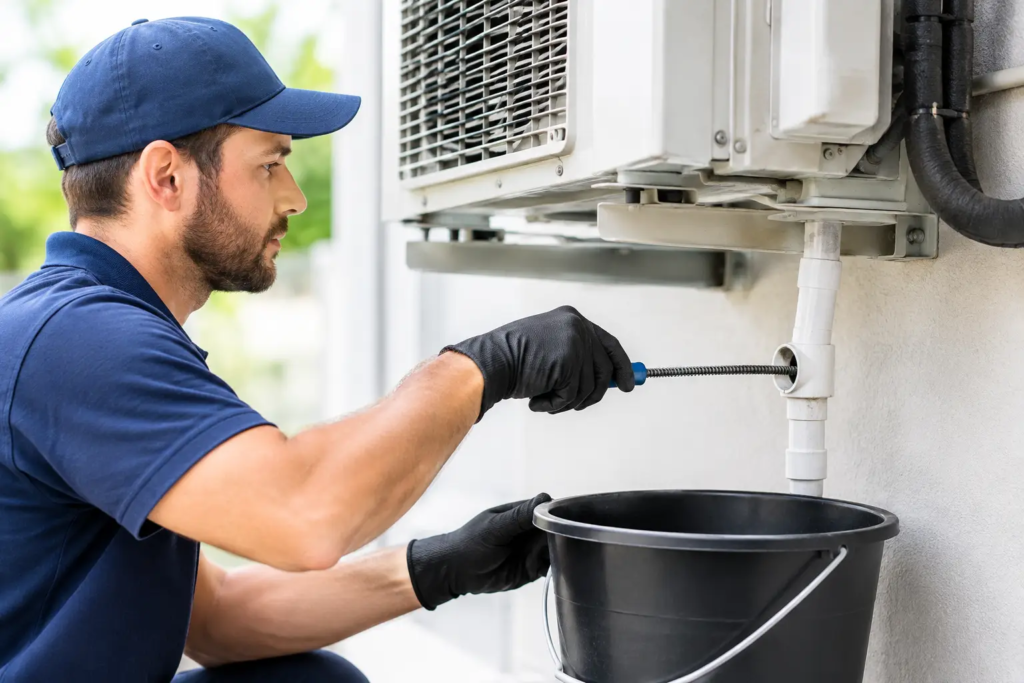
If water does not flow after a maintenance flush, a wet/dry vacuum can sometimes remove a clog from the exterior drain outlet. Place the vacuum hose over the end of the PVC pipe and use a towel or your hand to create a reasonable seal. Run the vacuum for a minute or two, then check whether debris and water have been pulled out.
Afterward, return to the indoor cleanout and add clean water slowly to verify drainage. Do not use excessive pressure from an air compressor or garden hose. Too much pressure can separate fittings, damage a drain trap, force debris farther into the line, or create a hidden leak inside a wall or ceiling.
If the drain line terminates in a plumbing connection, runs through an inaccessible area, or remains blocked after vacuuming, it is time for professional service. A technician can safely clear the line, inspect the trap and drain pan, confirm the proper slope, and identify installation issues that cause repeated clogs.
What Not to Do Around an Overflowing Air Handler
An overflowing drain pan is different from routine maintenance. Do not keep restarting the system in hopes that it will begin cooling again. If the float switch has shut the equipment down, bypassing it or forcing the AC to run can make water damage worse.
Avoid opening electrical panels or handling wet wiring. If the air handler is installed in an attic, use extra caution around wet ceilings and insulation. Water may travel farther than the visible drip point, especially around ductwork or framing.
Turn the system off, protect nearby belongings if it is safe to do so, and call for help when you have standing water, repeated shutdowns, a rusted drain pan, or moisture below the unit. For businesses, a fast response matters just as much. Water near equipment rooms, occupied spaces, inventory, or electrical areas can disrupt operations well beyond the AC repair itself.
How Often Should You Clean the Drain Line?
For many South Florida homes, checking the drain line every month during heavy cooling season and flushing it every one to three months is reasonable. The ideal schedule depends on system runtime, household conditions, filter changes, and whether the unit has a history of drain problems.
Commercial properties may need more frequent attention because larger systems operate longer, serve more occupants, and can produce more condensation. Restaurants, salons, medical offices, and other high-occupancy spaces may also have greater indoor humidity loads.
A professional maintenance visit provides a more complete check than a drain flush alone. The technician can inspect the evaporator coil, drain pan, float switch, blower performance, refrigerant operation, filter condition, and airflow. Those details work together. A dirty filter or coil, for example, can contribute to poor airflow and conditions that make moisture-related issues more likely.
Preventing Repeat AC Drain Clogs
The most practical prevention starts with keeping your filter clean and correctly sized. A neglected filter allows more dust to circulate through the system, where it can contribute to buildup around the coil and drain pan. Follow the filter replacement schedule recommended for your household, pets, occupancy level, and equipment.
Keep the area around the indoor unit clear so a technician can inspect it easily. If the system is in a garage or closet, look for signs of moisture during routine filter changes. If it is in an attic, inspect the area periodically for rust, water staining, or a full secondary pan.
Recurring clogs deserve more than repeated vinegar treatments. The drain line may have poor slope, an improperly configured trap, a damaged pan, a partially blocked outlet, or contamination from a dirty coil. Premier Cooling LLC technicians evaluate the full system rather than treating the visible symptom alone, helping homeowners and property managers avoid repeat leaks and unexpected cooling shutdowns.
When to Call a Professional
Call for HVAC service if the AC will not run after you clean the drain, water continues to back up, the drain pan is cracked or rusted, or you cannot access the line safely. You should also schedule service if you have had more than one drain clog in a season. That pattern usually points to an underlying issue worth correcting.
A clean drain line is a small detail with a big job: it protects your comfort, your equipment, and the spaces beneath your air handler. A quick check before the hottest, most humid months can be far easier than dealing with a shutdown or a wet ceiling when your AC is needed most.
