

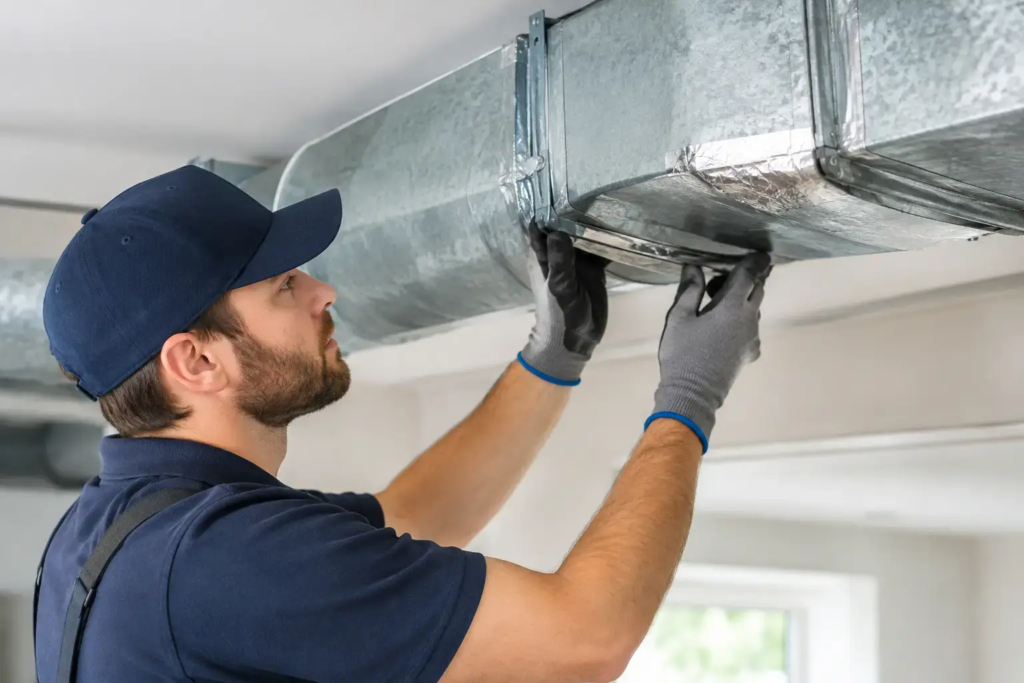
A room that never cools down, a vent that barely moves air, or a utility bill that rises without explanation can point to a problem hidden above the ceiling or behind the walls. Ductwork repair addresses leaks, loose connections, crushed sections, damaged insulation, and other issues that keep conditioned air from reaching the rooms where your family, tenants, customers, or employees need it.
In Broward County and across South Florida, duct problems can become especially noticeable during long stretches of heat and humidity. Your air conditioner may be running, but if cooled air is escaping into an attic, garage, crawlspace, or unconditioned area, the system has to work longer to meet the thermostat setting. That can affect comfort, humidity control, equipment wear, and monthly operating costs.
7 Signs You May Need Ductwork Repair
1. Some rooms stay warmer than others
Uneven temperatures are one of the most common warning signs. A bedroom at the end of the house may feel several degrees warmer than the living room, even when the AC is operating normally. While undersized equipment, poor insulation, sun exposure, and thermostat placement can also contribute, a disconnected, leaking, or undersized duct branch may be part of the problem.
A proper evaluation looks beyond the vent itself. Technicians should consider the home’s layout, return-air path, supply airflow, insulation, and the condition of accessible duct runs before recommending a repair.
2. Airflow from certain vents is weak
Hold your hand near the supply vents while the system is running. If one or two vents have noticeably weaker airflow than others, the duct feeding those rooms may be restricted, disconnected, or leaking. Flexible duct can sag, kink, or become crushed over time, especially in tight attic spaces.
Closing vents in other rooms is rarely a reliable fix. It can increase pressure in the duct system and may create new airflow problems. Finding the cause of the restriction is the better long-term approach.
3. Your home feels humid even with the AC on
South Florida air conditioners do more than lower the temperature. They also remove moisture from indoor air. When ducts leak in an attic or another hot, humid area, the system can pull unconditioned air into the return side or lose treated air before it reaches the living space.
The result may be a home that feels clammy despite a normal thermostat reading. Humidity can also make rooms feel warmer, encouraging occupants to lower the thermostat and increasing energy use. Duct repairs may help, but persistent humidity should be diagnosed carefully because drainage issues, oversized equipment, refrigerant concerns, and ventilation conditions can produce similar symptoms.
4. You hear rattling, whistling, or banging
Ducts should not make loud noises every time the system starts. Whistling can indicate air forcing through gaps or restrictions. Rattling may come from loose metal components, poorly supported ductwork, or a connection that has shifted. A banging sound can be related to duct movement, pressure changes, or HVAC equipment issues.
Noise alone does not tell the full story, but it is worth investigating before a small loose connection becomes a larger separation. In commercial properties, noisy ducts can also be disruptive in offices, waiting rooms, retail spaces, and customer-facing areas.
5. Dust returns quickly after cleaning
A dusty home does not automatically mean the ductwork is dirty. Dust can enter from open doors, pets, construction activity, aging filters, and normal daily living. However, leaks on the return side of the duct system can draw dusty attic or wall-cavity air into the HVAC system.
If filters become unusually dirty, dust gathers quickly around vents, or indoor air seems stale, a technician can inspect for return duct leaks and recommend whether repair, improved filtration, or air duct cleaning makes sense. These are related services, but they solve different problems. Cleaning removes buildup inside accessible ducts, while repair restores the system’s physical condition and airflow path.
6. Utility bills rise without a clear reason
Higher electric bills are not always caused by duct leakage. Rate changes, more occupants, extreme outdoor temperatures, aging AC equipment, and thermostat habits all matter. Still, damaged ducts can force an otherwise functional system to run longer because part of the cooling you paid for never reaches the occupied space.
A duct inspection is especially worthwhile if your bills have increased alongside hot rooms, weak airflow, or humidity concerns. The goal is not to promise a specific savings number. It is to identify avoidable air loss and make practical recommendations based on the condition of the system and the property.
7. There is visible damage, moisture, or disconnected ducting
If you can safely see ductwork in an attic, garage, utility room, or mechanical area, look for obvious sagging, torn insulation, crushed flex duct, disconnected joints, dark staining, or moisture around ducts. Do not step through attic framing or disturb damaged materials to inspect more closely. A professional can assess difficult-to-reach areas safely.
Moisture deserves prompt attention. In a humid climate, damaged insulation or condensation around ductwork can contribute to material deterioration and may create conditions that require more than a simple tape-and-seal repair.
What Professional Ductwork Repair Can Include
The right repair depends on the duct material, location, age, accessibility, and extent of damage. A minor accessible leak may be corrected by reconnecting a section and sealing joints with approved materials. A crushed or deteriorated flex duct run may need replacement. Missing or damaged insulation may need to be restored to help prevent heat gain and condensation.
For larger systems, the technician may also evaluate duct sizing, support spacing, return-air capacity, register placement, and static pressure. This matters because a duct system is not just a collection of tubes. It is a balanced pathway designed to deliver and return a specific volume of air. Sealing every visible gap without considering pressure and airflow can create unintended performance issues.
In older homes, ductwork may have been altered during renovations, additions, or previous equipment replacements. A room addition with no properly designed return path, for example, can remain uncomfortable even after supply duct repairs. That is why the best recommendation is based on the whole system rather than a quick visual patch.
Repair, Replacement, or Cleaning: Which Is Appropriate?
Ductwork repair is often the most cost-effective choice when the damage is localized and the remaining system is in good condition. Reconnecting a separated run, correcting a kink, sealing accessible leaks, or replacing a short damaged section can improve performance without replacing the entire duct network.
Replacement may be more sensible when ducts are extensively deteriorated, poorly designed, contaminated by water damage, repeatedly patched, or difficult to access for lasting repairs. In some cases, replacing older ductwork during an AC replacement can reduce labor duplication and allow the new equipment to operate as designed.
Air duct cleaning has a different purpose. It may be appropriate when there is significant dust buildup, post-construction debris, pest-related contamination, or other confirmed concerns inside the ducts. Cleaning does not repair disconnected joints, restore insulation, or correct inadequate airflow. A clear assessment should explain which service is needed and why.
Why Fast Attention Matters in South Florida
A small duct issue can become more expensive when the AC runs hard for months at a time. Lost airflow may lead to longer cooling cycles, more strain on components, and comfort complaints that tempt people to keep lowering the thermostat. For businesses, uneven cooling can affect staff productivity, customer comfort, and tenant satisfaction.
Not every duct concern is an emergency, but certain situations should be addressed quickly: a complete duct disconnection, water-damaged duct insulation, burning smells, a sudden major loss of airflow, or conditions that leave vulnerable occupants without adequate cooling. If an HVAC system stops cooling during severe heat, 24/7 service can help determine whether the issue is the equipment, the ductwork, or both.
Premier Cooling LLC provides licensed, insured HVAC service for homes and businesses throughout South Florida, with practical recommendations based on airflow, property layout, insulation, and comfort goals. A professional inspection can help separate a simple duct repair from a larger system issue before money is spent in the wrong place.
If one room has become the place everyone avoids during the afternoon, do not assume you need a new air conditioner. Start with a thorough airflow and duct evaluation. A well-repaired duct system helps the cooling you already pay for reach the spaces that need it most.
