

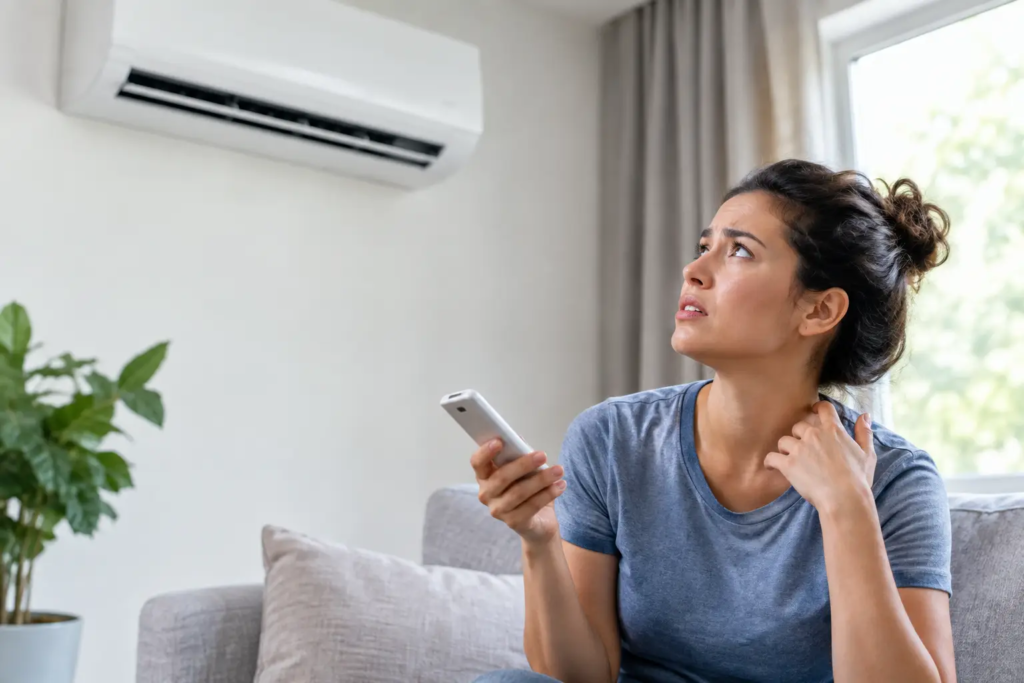
A thermostat set to 72 degrees does not help much when the house still feels sticky, warm, and uncomfortable. AC not cooling in humidity is one of the most common comfort complaints in South Florida, especially after an afternoon storm or during the hottest months of the year. Your system may be running, blowing air, and using electricity, yet still struggle to remove enough heat and moisture from the home.
High humidity makes cooling work harder, but it should not leave your family uncomfortable. A properly sized, well-maintained air conditioner should lower indoor temperature while pulling moisture from the air. When it cannot keep up, the cause may be simple, such as a clogged filter, or more involved, such as restricted airflow, a refrigerant issue, drainage trouble, or an undersized system.
Why Humidity Makes an AC Feel Less Effective
Air conditioners do two jobs at once: they remove heat and they remove humidity. Warm indoor air passes over the evaporator coil, where moisture condenses and drains away. That process is what makes a cooled room feel crisp rather than clammy.
In Broward County and across South Florida, outdoor air often carries a heavy moisture load. Every time doors open, people come in from outside, or leaky ductwork pulls in attic or outdoor air, that moisture enters the conditioned space. If the AC cannot remove it fast enough, indoor humidity rises. Even if the thermostat shows the target temperature, a humid home can feel several degrees warmer.
Humidity can also make a system run longer. Longer cycles are not automatically a problem during extreme weather, but nonstop operation without improved comfort deserves attention. It can increase utility costs, add wear to components, and signal that the system needs service.
AC Not Cooling in Humidity: Common Causes
A dirty filter or restricted airflow
A clogged air filter limits the amount of air moving across the evaporator coil. With less airflow, the system cannot absorb heat and moisture efficiently. In some cases, the coil can become cold enough to freeze, reducing cooling even further.
Start by checking the filter. If it is visibly gray, packed with dust, or has not been changed in one to three months, replace it with the correct size and type for your system. Avoid choosing an overly restrictive filter unless your HVAC professional has confirmed that your equipment can handle it. A high-rated filter may capture finer particles, but it can also reduce airflow when neglected.
Closed supply vents, blocked return grilles, crushed flex duct, and dirty indoor coils can create similar problems. Keep furniture, curtains, and rugs away from return vents so the system can circulate air properly.
A dirty outdoor condenser coil
The outdoor unit releases the heat removed from your home. In South Florida, leaves, grass clippings, salt air, dirt, and landscaping debris can coat the condenser coil and make it harder for that heat to escape. The system may keep running while its cooling capacity drops.
You can safely clear loose debris from around the unit and maintain open space around it. Do not use a pressure washer or bend the coil fins with improvised tools. A professional maintenance visit includes cleaning the coil correctly and checking whether the unit is operating within manufacturer specifications.
A blocked condensate drain
When humidity is high, your AC produces a surprising amount of water. That water should flow through the condensate drain line and out of the home. Algae, sludge, dust, or debris can clog the line, causing water to back up.
Many systems have a float switch that shuts cooling down when the drain pan fills. Others may continue operating while creating water damage near the air handler. A musty smell, a full drain pan, water around the indoor unit, or a sudden shutdown are reasons to schedule service promptly.
Low refrigerant or a refrigerant leak
Refrigerant is not a fuel that an AC simply uses up. If the level is low, there is usually a leak that needs to be found and repaired. Low refrigerant can prevent the evaporator coil from absorbing enough heat, leading to weak cooling, ice on the refrigerant line or coil, and longer run times.
Adding refrigerant without diagnosing the leak is not a lasting fix. A licensed technician should inspect the system, identify the source of the problem, make the appropriate repair, and charge the system to the required level.
An oversized or undersized system
System size matters more in South Florida than many homeowners realize. An undersized AC may run continuously on hot, humid days and still fail to reach the thermostat setting. An oversized unit has a different problem: it may cool the air too quickly and shut off before it runs long enough to remove adequate moisture.
The right replacement is not determined by square footage alone. Home layout, ceiling height, insulation, window exposure, duct condition, occupancy, and heat-producing appliances all affect the load. A careful evaluation helps avoid replacing one comfort problem with another.
What You Can Check Before Calling for Repair
A few safe checks can help narrow down the issue. Set the thermostat to cool and lower the temperature setting a few degrees below the current room temperature. Confirm that the fan setting is on Auto rather than On. The On setting keeps the blower moving between cooling cycles and can reintroduce moisture from the coil into the home.
Check the filter, confirm that supply vents are open, and make sure the outdoor unit is not surrounded by debris. Look for water around the indoor air handler, unusual ice buildup, burning smells, buzzing, or repeated breaker trips. If you see ice, turn the thermostat off and set the fan to On only if it is safe to do so, then contact an HVAC professional. Continuing to run a frozen system can damage the compressor.
For businesses, pay attention to comfort differences between rooms, tenant complaints, and areas with frequent door traffic. A restaurant, retail entrance, office with server equipment, or space with poor airflow may need a targeted solution instead of a blanket thermostat adjustment.
When Humidity Means You Need Professional Help
Call for service when the system runs for hours without reaching the set temperature, indoor humidity stays above roughly 55 to 60 percent, or the air feels clammy despite active cooling. Water leaks, frozen lines, electrical issues, loud mechanical sounds, and a system that will not start are also repair concerns that should not wait.
A qualified HVAC technician can check airflow, static pressure, coil condition, electrical components, refrigerant performance, thermostat operation, duct leakage, and condensate drainage. That testing matters because several issues can produce the same symptom. Guessing at the cause can lead to unnecessary repairs or missed problems.
Premier Cooling LLC provides licensed, insured HVAC service for homes and commercial properties throughout South Florida, including responsive help when a cooling problem cannot wait. With more than 1,200 customers served and 24/7/365 emergency availability, the focus is on clear recommendations that fit the property, the equipment, and the local climate.
Preventing Sticky Indoor Air Between Service Visits
Preventative maintenance is one of the best defenses against poor cooling in humid weather. During a maintenance visit, technicians can clean critical components, clear the drain line, inspect electrical connections, measure system performance, and catch small concerns before they become an emergency call.
Regular filter changes help, but they are only one part of the picture. Duct leaks, poor insulation, disconnected ducts, and insufficient return airflow can all allow humidity to undermine comfort. If certain rooms are consistently warmer or more humid than the rest of the building, ask for an airflow and ductwork evaluation rather than relying on portable fans or lower thermostat settings.
A working AC should make your home or business feel comfortable, not merely less hot. When humidity starts winning the battle, timely diagnosis can protect your equipment, control energy costs, and help everyone inside breathe easier.
