

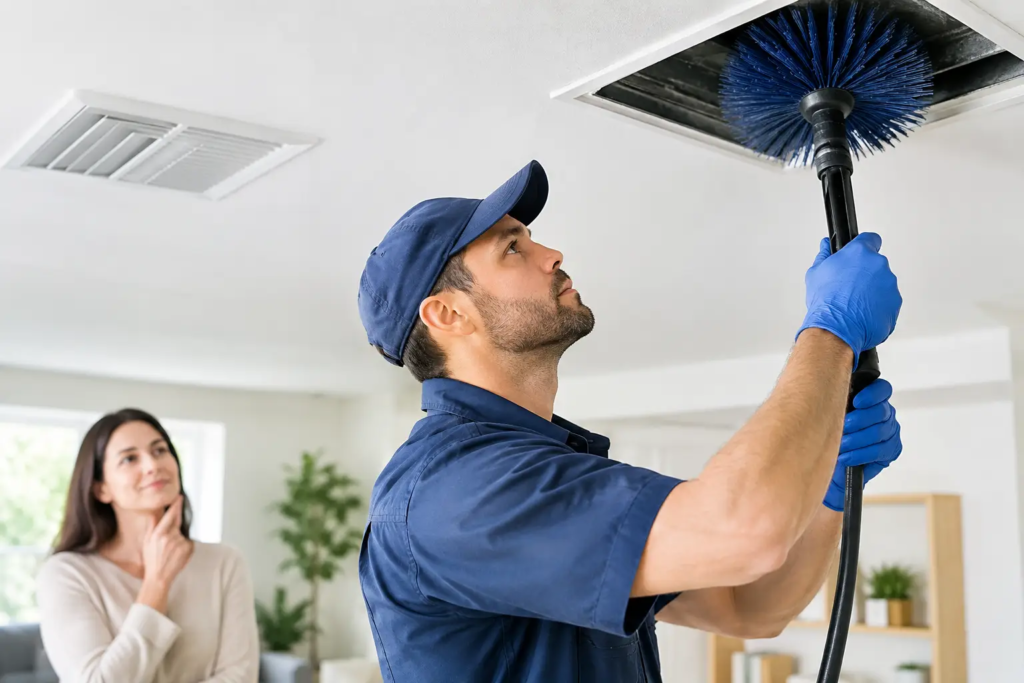
A stuffy nose that starts after you get home, more dust on furniture than usual, or allergy symptoms that worsen when the AC runs can make your ductwork a reasonable place to investigate. Air duct cleaning for allergies can help reduce airborne irritants in certain situations, but it is not a cure-all. The real value comes from identifying what is circulating through your HVAC system and addressing the moisture, filtration, or housekeeping issue behind it.
In Broward County and across South Florida, that distinction matters. Air conditioning systems run for much of the year, and persistent humidity can create conditions that allow dust, debris, and microbial growth to build up if equipment or ducts are not maintained properly. A qualified inspection can show whether duct cleaning is a practical next step or whether a different HVAC repair or indoor air-quality solution will provide better results.
What Air Duct Cleaning Can Remove
Your return vents pull air from living and working areas back to the HVAC system. Along with that air come ordinary household particles: dust, pet dander, pollen brought in from outdoors, fabric fibers, and other debris. Some of that material is caught by the filter. The rest can settle in return ducts, supply ducts, registers, and HVAC components over time.
Professional duct cleaning uses specialized equipment to loosen and remove accumulated debris from accessible ductwork and related components. When done properly, the process is designed to contain particles rather than push them back into rooms. A technician should assess the duct system first, explain what is present, and recommend cleaning based on actual conditions instead of treating every home as the same.
For allergy-sensitive occupants, removing a noticeable buildup may reduce one source of recirculated dust and allergens. It can also improve the cleanliness of supply vents and help homeowners start fresh after construction work, a remodeling project, water damage repairs, or a move into a previously occupied property.
When Air Duct Cleaning for Allergies Is Most Likely to Help
Duct cleaning tends to make the most sense when there is evidence of contamination or heavy debris, not simply because allergies exist. If you can see dust blowing from vents, notice debris around registers shortly after cleaning them, or find that rooms become dusty unusually fast, an inspection is worthwhile.
It is also sensible after major indoor dust events. Drywall sanding, flooring replacement, renovations, pest issues, or a prolonged period without effective filtration can leave a large particle load in the HVAC system. Homes with multiple pets, smokers, or frequent open windows may also accumulate more material than a tightly sealed home with consistent filter changes.
Moisture is a separate concern in South Florida. Condensation around ducts, damaged insulation, clogged drain lines, or poor system performance can contribute to elevated indoor humidity. If a technician finds signs of moisture or possible microbial growth, cleaning alone may not solve the problem. The moisture source must be corrected first, whether that means repairing duct insulation, addressing an AC drainage issue, sealing leaks, or adjusting system operation.
For commercial properties, the same principle applies. Offices, retail spaces, and multi-tenant buildings can benefit from duct cleaning when renovation debris, visible buildup, odors, or occupant comfort complaints point to a ventilation concern. Facilities managers should pair cleaning with an evaluation of filters, outdoor air, equipment maintenance, and humidity control.
Signs Your HVAC System May Need Attention
Allergy symptoms have many causes, including outdoor pollen, pets, carpeting, bedding, and mold in other areas of the home. Still, your HVAC system deserves a closer look when symptoms align with its operation. You may notice coughing, sneezing, or eye irritation that becomes more noticeable when the air conditioner turns on. Musty odors, uneven cooling, weak airflow, or visible dust at vents are additional reasons to schedule an evaluation.
A dirty filter is often the simplest explanation. If the filter is clogged, improperly sized, or installed backward, it can restrict airflow and allow more particles to remain in circulation. Replacing it with the correct filter is usually a more immediate and lower-cost first step than cleaning ducts.
Check registers as well. A supply vent coated in dust does not automatically mean the entire duct system is heavily contaminated, but it can signal that the system needs cleaning, improved filtration, or better routine maintenance. Never block return vents with furniture or decorative covers. Restricted return airflow can make comfort problems and indoor air concerns worse.
Duct Cleaning Is Not a Substitute for Moisture Control
South Florida homes face a year-round challenge: warm outdoor air holds a great deal of moisture. When that humid air enters a home through leaks, poorly sealed ducts, or frequent door openings, indoor humidity can rise. An oversized AC unit, a unit that short-cycles, or equipment with drainage problems may also struggle to remove enough moisture.
High humidity can make a home feel warmer, encourage dust mites, and contribute to musty odors. That is why an allergy-focused duct cleaning discussion should include the entire system. A dependable HVAC contractor will look at refrigerant performance, condensate drainage, airflow, duct condition, insulation, and filter placement before recommending a single service.
The practical goal is not sterile indoor air, which is unrealistic. It is cleaner, properly filtered air moving through a dry, well-maintained system. That combination is far more useful for comfort and allergy management than duct cleaning by itself.
Steps That Support Cleaner Indoor Air
Regular habits matter as much as occasional professional service. Start with the manufacturer-approved filter size and replace it on schedule. The right filter rating depends on the system, household needs, and airflow capacity. A very dense filter can capture smaller particles, but it may also create airflow restrictions if the equipment is not designed for it. A technician can help you choose a filter that balances filtration and system performance.
Keep supply and return vents clean and unobstructed. Vacuum rugs and upholstery regularly, wash bedding in hot water when appropriate, and manage pet dander through consistent grooming and cleaning. If outdoor pollen is high, keeping windows closed while the AC runs can reduce what enters the home.
Preventative HVAC maintenance is especially valuable in this climate. During a service visit, technicians can check the blower area, evaporator coil condition, drain line, electrical components, refrigerant operation, and airflow. Catching a drainage or humidity issue early can protect both indoor comfort and equipment efficiency.
If symptoms are significant or unexplained, speak with a healthcare professional as well. An HVAC inspection can identify environmental contributors, but it cannot diagnose the cause of an allergic reaction.
What to Expect From a Professional Duct Cleaning Visit
A reputable provider should begin with an honest assessment. The technician should be able to explain why cleaning is recommended, what areas will be cleaned, and whether they found concerns such as damaged ducts, moisture, disconnected sections, or insulation problems. Be cautious of unusually low advertised prices that turn into pressure for unnecessary add-ons once a crew arrives.
The cleaning process should use appropriate negative-air equipment and agitation tools to remove debris while controlling dust. Registers, returns, and accessible duct runs are addressed systematically. Depending on the system condition, the technician may also recommend cleaning HVAC components that affect airflow and air quality.
Ask questions before work begins. Confirm the scope, pricing, estimated duration, and whether any repairs are separate from the cleaning service. Clear answers protect you from surprises and help ensure the work fits your property’s needs.
Premier Cooling LLC provides homeowners and businesses with straightforward recommendations based on system condition, airflow, and South Florida humidity demands. Licensed and insured technicians can help determine whether duct cleaning, maintenance, filtration changes, or another solution is the right next step.
If allergies seem worse indoors, begin with the basics: a clean, properly fitted filter, controlled humidity, and an HVAC system that is draining and circulating air correctly. When an inspection shows meaningful buildup or a moisture-related concern, duct cleaning can be a useful part of creating a cleaner, more comfortable space for your family, employees, or customers.
