

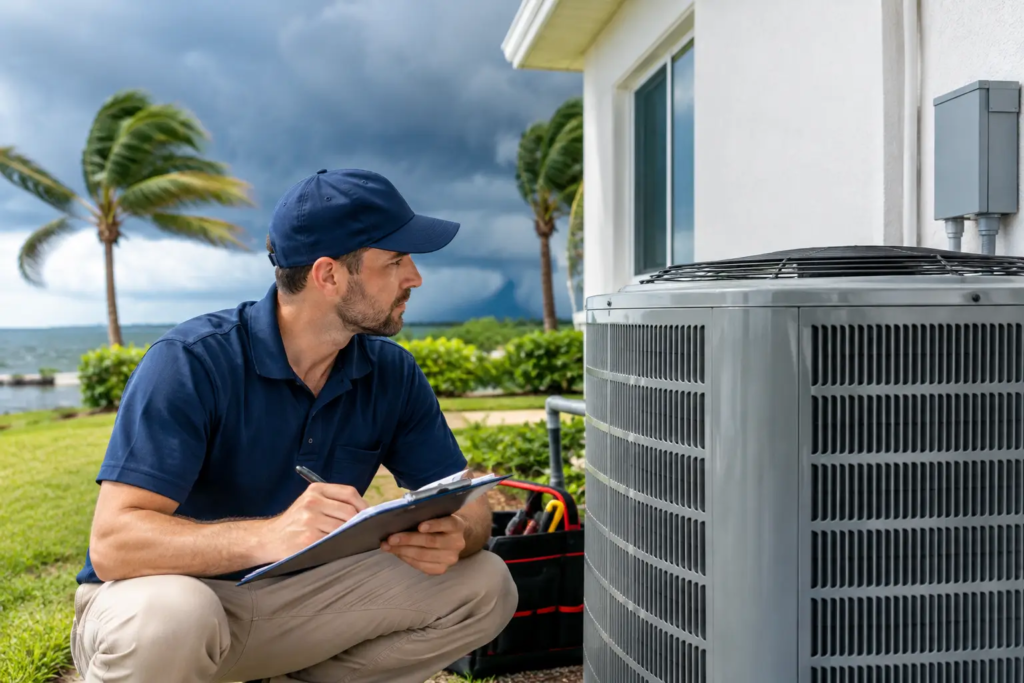
When a hurricane watch is posted in South Florida, your air conditioner can go from background comfort to a piece of equipment that needs real protection. This hurricane HVAC preparation checklist helps Broward County homeowners and property managers reduce preventable damage, avoid unsafe restart attempts, and prepare for hot, humid conditions after the storm passes.
A central AC system is built for outdoor weather, but it is not designed to handle flying debris, floodwater, electrical surges, or a prolonged power outage without some preparation. The right steps depend on your equipment, property elevation, and storm timing. Start early, before supply runs begin and conditions make outdoor work unsafe.
Hurricane HVAC Preparation Checklist: Before the Storm
Begin with a quick visual inspection of the outdoor condenser, indoor air handler, and the area around both units. You are looking for loose objects, drainage concerns, and signs that the system already needs attention.
Clear the space around the outdoor unit. Move patio furniture, grills, planters, toys, pool equipment, and loose yard items well away from the condenser. Even a lightweight object can damage refrigerant lines, fan blades, or the coil when wind speeds increase. Trim loose branches only if there is enough time and it can be done safely.
Check that the condenser is firmly secured to its pad or mounting brackets. In South Florida, properly installed equipment should have hurricane-rated tie-downs or anchoring appropriate to the location and local code requirements. Do not attempt a last-minute modification with rope, bungee cords, or improvised straps. Those measures can damage the cabinet and may not hold under sustained wind.
If your outdoor unit sits in a low area, make sure nearby drains and gutters are clear. Standing water around the condenser can create problems after the storm, especially if debris blocks drainage paths. A raised equipment pad can help in flood-prone locations, but that is an improvement to plan with a licensed HVAC professional well before hurricane season.
Inside, replace a heavily loaded air filter if one is available. A clean filter will not make a system hurricane-proof, but it supports airflow when you need cooling before the storm and after power returns. It is also wise to keep extra filters on hand, since indoor air can become dusty after cleanup and construction activity.
Do Not Wrap the Outdoor AC Unit
A common mistake is covering a condenser tightly with a tarp, plywood, or plastic before a storm. This can trap moisture, restrict drainage, and create a surface that catches wind. Modern outdoor units are designed to be exposed to rain.
If the manufacturer specifically permits a protective cover, follow its instructions exactly. Otherwise, focus on clearing debris, confirming proper anchoring, and protecting the unit from nearby loose objects. Never place plywood directly against the coil or fan grille.
Prepare for a Safe Shutdown
As conditions worsen, follow local emergency guidance and prioritize your family’s safety. If flooding is expected near the outdoor unit, if water is entering the home, or if officials advise shutting down electrical equipment, turn the thermostat to Off. Then switch off the HVAC breaker only if it is safe to access your electrical panel.
Turning off the system before an outage can help prevent the equipment from attempting to restart repeatedly during unstable power conditions. Do not operate central air conditioning if the outdoor unit or electrical components are standing in water.
For window AC units, check that each unit is securely mounted and properly sealed. Do not remove a unit from an upper floor or make exterior repairs once winds begin. If a unit cannot be safely removed in advance, secure the window according to the window manufacturer’s storm protection plan and keep the unit turned off during severe conditions.
Protect Power and Indoor Comfort
Power interruptions are common during hurricanes, and South Florida heat returns quickly after the rain stops. A little planning can make the outage more manageable without putting your HVAC equipment at risk.
Set your thermostat a few degrees lower than usual while the system is operating normally before the storm. This can pre-cool the home, giving indoor temperatures more time to rise during an outage. Do not set it so low that the system runs continuously or freezes the indoor coil. In high humidity, a reasonable pre-cool is more useful than extreme thermostat settings.
Close blinds and curtains, limit door openings, and keep interior doors arranged to support airflow. Battery-powered fans, drinking water, flashlights, and backup phone charging are more useful during an outage than trying to force HVAC equipment to run without proper power.
If you use a generator, never connect it directly to your home’s electrical system unless a qualified electrician has installed an approved transfer switch. Backfeeding power can seriously injure utility workers and damage equipment. Most portable generators are not sized or configured to safely run a central air conditioner. Run generators outdoors, far from doors, windows, and vents, to prevent carbon monoxide exposure.
For commercial properties, identify the person responsible for HVAC shutdown and restart before a storm arrives. Facilities teams should also document equipment conditions, verify that rooftop access is secured, and protect records or inventory located below ceiling equipment or condensate lines.
What to Check After the Hurricane
Wait until conditions are safe and local authorities have cleared the area before inspecting HVAC equipment. Avoid downed power lines, damaged trees, and standing water. If you smell burning, see damaged wiring, or notice flooding around electrical equipment, do not touch the system.
Start with a visual inspection. Look for dents in the condenser cabinet, bent coil fins, displaced refrigerant lines, loose electrical disconnects, debris inside the fan area, or a unit that has shifted on its pad. Check the air handler area for water intrusion, ceiling staining, wet insulation, or a clogged condensate drain line.
Use this post-storm checklist before restarting:
- Confirm the outdoor unit and electrical disconnect are dry and free of debris.
- Make sure no refrigerant lines, wiring, panels, or mounting brackets are visibly damaged.
- Check that the condenser remains level and securely attached to its pad or stand.
- Inspect the return grille and filter for moisture, dirt, or storm-related debris.
- Look for water around the indoor air handler, ductwork, and condensate drain pan.
If everything appears dry and undamaged, restore power at the breaker and set the thermostat to Cool. Give the system several minutes to begin its normal cycle. Listen for unusual rattling, grinding, clicking, or repeated attempts to start. Check that cool air is reaching the vents and that the outdoor fan is operating normally.
Do not keep resetting a tripped breaker. A breaker that trips again, weak airflow, warm air, water leaks, or a burning odor can indicate storm-related damage that needs professional diagnosis. Continued operation may turn a repairable issue into a compressor, electrical, or air-quality problem.
When to Call an HVAC Professional
A professional inspection is the safer choice when the condenser was submerged, struck by debris, moved from its base, or exposed to a power surge. It is also appropriate if your system was off for several days and will not restart normally once power is restored.
Licensed technicians can inspect electrical connections, capacitors, contactors, refrigerant lines, drainage components, and airflow conditions that are not obvious from the outside. This matters in South Florida, where high humidity after a storm can quickly lead to condensation, drainage backups, and indoor comfort issues.
For property owners who want help preparing before hurricane season or assessing equipment afterward, Premier Cooling LLC provides licensed HVAC service with clear recommendations and 24/7/365 emergency availability. A quick inspection before conditions deteriorate can help protect comfort, safety, and the equipment your home or business depends on.
The best time to make hurricane HVAC decisions is while the weather is calm. Keep this checklist with your storm supplies, know where your HVAC breaker is located, and give your system the same practical preparation you give your windows, roof, and emergency kit.
