

A South Florida AC that suddenly cannot keep up with the afternoon heat is not always dealing with a major equipment failure. Sometimes, the problem is refrigerant loss. Knowing how to detect refrigerant leaks can help you act before low refrigerant leads to frozen coils, higher electric bills, compressor damage, or an uncomfortable home or business.
Refrigerant is not a fuel that an air conditioner normally uses up. It circulates in a sealed system, carrying heat out of your indoor air and releasing it outside. If the level is low, there is usually a leak somewhere in the refrigerant circuit. Adding more refrigerant without finding and repairing that leak may restore cooling briefly, but it does not solve the underlying problem.
How to Detect Refrigerant Leaks Before Cooling Fails
The most useful first step is to watch for changes in how your system performs. A leak may begin small and become more noticeable over weeks or months, especially during South Florida’s long cooling season when the system runs hard.
Your AC runs longer but the air is not as cold
If your thermostat is set normally but rooms feel warmer than usual, check the air coming from the supply vents. It may still feel somewhat cool, yet lack the crisp, consistent cooling you expect. Low refrigerant reduces the system’s ability to absorb indoor heat, so the equipment may run for long cycles without bringing the temperature down.
This symptom can also point to dirty filters, duct leaks, thermostat issues, poor insulation, or an undersized system. That is why cooling performance alone does not confirm a refrigerant leak. It does, however, make a professional inspection worthwhile.
Ice forms on the indoor coil or refrigerant line
Frost or ice on the insulated copper line near the outdoor condenser is one of the more visible warning signs. You may also notice water around the indoor air handler after the ice melts. When refrigerant pressure drops, the evaporator coil can become cold enough to freeze moisture in the air.
Do not assume a frozen line automatically means a leak. Restricted airflow from a clogged air filter, a dirty evaporator coil, a blower problem, or blocked vents can produce similar icing. Replace a visibly dirty filter, make sure vents are open, and avoid continuing to operate a system that is freezing. Running it while iced over can strain the compressor.
You hear hissing, bubbling, or unusual sounds
A larger leak can sometimes create a hissing sound as refrigerant escapes from a line, coil, valve, or connection. A bubbling or gurgling sound may occur when refrigerant and oil move through the system abnormally. These sounds are not always easy to locate, particularly around an outdoor unit with fans and compressor noise.
If you hear a persistent hiss near the air handler or condenser, do not try to tighten fittings or open panels yourself. Refrigerant systems operate under pressure, and proper repair requires licensed handling practices and the correct equipment.
Your electric bill rises without a clear reason
An AC with low refrigerant must work harder and run longer to remove the same amount of heat. If usage habits have not changed but your electric bill has climbed, declining HVAC efficiency may be part of the reason.
In Broward County and across South Florida, utility costs can also rise during hotter, more humid stretches of weather. Compare the bill to the same period last year and pay attention to run time, comfort, and airflow. Several small warning signs together are more meaningful than a bill increase by itself.
Oily residue appears around coils or line connections
Refrigerant often travels with compressor oil. When a leak occurs, a technician may find an oily film or residue around copper tubing joints, service valves, the evaporator coil, or condenser coil. Homeowners may occasionally spot this residue, but it can be hard to distinguish from dirt, condensation, or normal outdoor grime.
Avoid touching suspected residue or trying to wash it away before an inspection. Leaving the area undisturbed can help the technician identify the source faster.
What a Professional Refrigerant Leak Test Involves
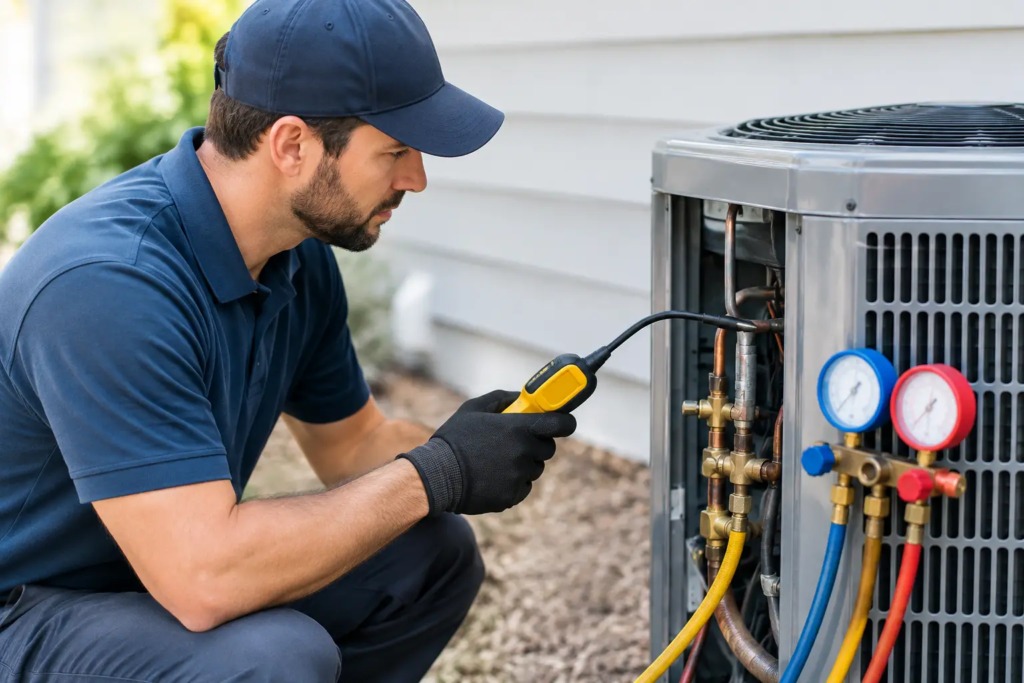
A reliable diagnosis requires more than checking whether the AC is cooling. Licensed HVAC technicians use calibrated tools and system readings to determine whether refrigerant is low and, more importantly, where it is escaping.
The process generally begins with inspecting the equipment, checking airflow, examining filters, and measuring operating pressures and temperatures. Those readings help distinguish a likely refrigerant problem from airflow restrictions, electrical faults, compressor issues, or thermostat problems.
If a leak is suspected, the technician may use an electronic leak detector around likely failure points. These detectors are sensitive enough to identify refrigerant vapor that may not be visible or audible. Technicians can also use a soap-bubble solution on accessible fittings, where active leaks create bubbles, or introduce an approved tracer method when needed to identify difficult leaks.
Some leaks occur in hard-to-reach places, including the indoor evaporator coil. In older systems, coil corrosion can create tiny pinhole leaks that slowly reduce refrigerant over time. Coastal moisture, salt air, frequent operation, and age can all contribute to corrosion in South Florida equipment, although each installation has different conditions.
Once the leak is located, the right repair depends on its position and the condition of the system. A leaking service valve or accessible line connection may be repairable. A heavily corroded coil, damaged refrigerant line, or aging system may make replacement the more practical long-term choice. A good recommendation should account for repair cost, system age, refrigerant type, efficiency, and how often the unit has needed service.
What Not to Do When You Suspect a Leak
Do not buy a DIY recharge kit or attempt to add refrigerant yourself. Besides the safety and legal concerns, overcharging or using the wrong refrigerant can damage the system and make accurate diagnosis harder. Refrigerant should be recovered and handled properly, not released into the air.
Avoid pour-in leak sealants as well. These products can create restrictions, contaminate service equipment, and complicate future repairs. They may sound like a quick solution, but they are rarely a dependable answer for a residential or commercial AC system.
It is also a mistake to keep lowering the thermostat in an attempt to force more cooling. That usually increases run time without correcting the problem. If the indoor coil is frozen, turn off cooling and arrange service. Letting the ice melt before the appointment can give the technician clearer access to inspect the coil and drainage area.
When a Refrigerant Leak Needs Urgent Service
A suspected leak deserves prompt attention when the AC is no longer cooling in extreme heat, ice is building on the equipment, or the system is shutting down repeatedly. For businesses, fast action is especially important when poor cooling affects customers, employees, sensitive equipment, or tenant comfort.
Call for service right away if you notice a strong chemical odor, hear a pronounced and continuous hissing sound, or have symptoms such as dizziness or irritation near the equipment. While many modern refrigerants have little odor and typical household leaks are not usually an immediate health emergency, refrigerant should never be treated casually. Ventilate the area if practical, keep people away from the equipment, and let trained professionals assess the situation.
At Premier Cooling LLC, licensed and insured technicians can evaluate the complete system rather than simply adding refrigerant and sending you on your way. That approach matters because a correct repair protects comfort now and helps prevent repeat breakdowns during the next stretch of South Florida heat.
If your AC is taking longer to cool, freezing up, or costing more to run, trust the pattern you are seeing. A timely inspection can turn a small leak into a clear repair plan before it becomes a no-cooling emergency.
