

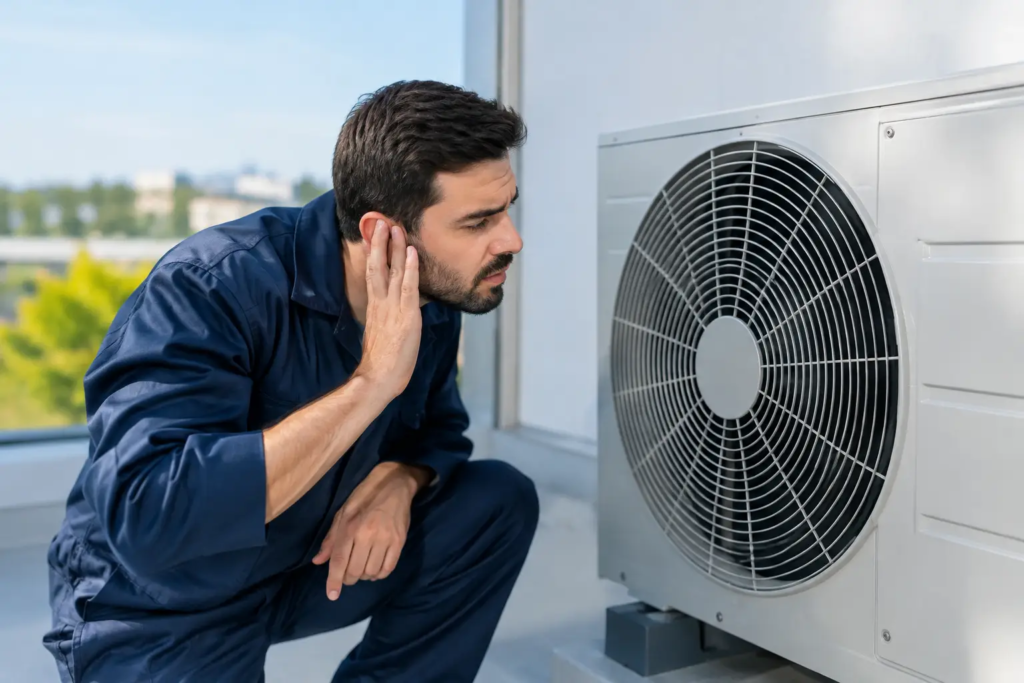
A South Florida AC often runs for long stretches, especially through a humid afternoon. That makes a new rattle, squeal, or bang hard to ignore. AC noise diagnosis starts with the sound itself, but the real goal is to identify whether your system needs a simple adjustment, a scheduled repair, or an immediate shutdown before a small issue becomes an expensive failure.
Some noises come from normal operation. Others point to loose electrical parts, restricted airflow, failing motors, or refrigerant problems. Paying attention to when the noise starts, where it comes from, and whether cooling performance has changed gives a technician a much clearer place to begin.
Start With Safety and a Few Simple Observations
Before investigating, listen without removing access panels or reaching near moving parts. Central air equipment contains high-voltage electrical components, sharp metal edges, and fast-moving fan blades. If you hear loud metal-on-metal scraping, see smoke, smell burning plastic, or notice the breaker repeatedly trips, turn the system off at the thermostat and circuit breaker. Call for professional service rather than restarting it.
For less urgent sounds, note whether the noise occurs when the indoor blower starts, when the outdoor condenser turns on, only during cooling, or all the time. Also check whether the home is cooling evenly and whether airflow from supply vents feels weaker than usual. These details matter because the indoor air handler, ductwork, thermostat, outdoor unit, and refrigerant circuit can all create very different noises.
In Broward County and surrounding South Florida communities, salt air, storm debris, high humidity, and nearly year-round cooling demand can accelerate wear. A sound that seems minor during a mild week may become more serious when the system has to run continuously in peak heat.
AC Noise Diagnosis by Sound
Banging or clanking
A sharp bang or repeated clank usually deserves a prompt service visit. In the outdoor unit, it can mean a loose fan blade, worn compressor mounting hardware, or a damaged part inside the compressor. Inside, a blower wheel may have loosened or become unbalanced.
Do not assume every bang means compressor failure. A loose panel or branch caught against the condenser cabinet can also make noise. Still, continued operation with a loose fan or internal component can cause additional damage, so it is wise to turn the system off if the noise is loud or persistent.
Squealing or screeching
High-pitched squealing often comes from a motor or blower assembly. Older belt-driven systems may have a worn or slipping belt, while many newer systems use direct-drive blower motors where the issue may be bearings, a failing motor, or a damaged wheel.
A brief sound at startup is less concerning than a squeal that continues while the system runs. If airflow has dropped or the air handler is vibrating, schedule service soon. Running a struggling blower motor can lead to overheating and leave the home without cooling when you need it most.
Buzzing or humming
A low, steady hum is normal for much HVAC equipment. A louder buzz, however, can signal an electrical issue such as a failing contactor, capacitor, loose wiring, or transformer. Outdoor condenser units commonly produce this sound when a component receives power but the fan or compressor cannot start correctly.
Buzzing can also come from ice buildup, debris around the unit, or a loose cabinet panel. Because electrical diagnosis requires training and proper testing equipment, avoid touching wires or attempting a repair yourself. If the unit buzzes but does not cool, shut it off to prevent further strain.
Clicking
One click when the thermostat calls for cooling and another when the cycle ends can be normal. Repeated clicking, clicking with no startup, or clicking paired with warm air may point to a failing thermostat, relay, contactor, capacitor, or control board.
It depends on the pattern. A thermostat that clicks once and starts the system is generally doing its job. A condenser that clicks repeatedly without the fan turning needs attention, especially if the breaker trips or the outdoor unit becomes unusually hot.
Rattling or vibrating
Rattling is one of the most common AC complaints and one of the broadest. It may be as simple as a loose screw, access panel, line-set cover, or filter door. It can also be caused by loose ductwork, debris inside the outdoor unit, or a fan assembly that is beginning to fail.
You can safely check for obvious leaves, palm fronds, or other debris around the outdoor condenser after turning the system off. Keep at least a couple of feet clear around the cabinet so it can release heat properly. Do not insert tools or hands through the fan guard.
If the vibration seems to travel through walls or ceiling vents, ductwork may need to be secured or insulated. This is particularly common where ducts pass through attics or where flexible duct connections have shifted over time.
Hissing or bubbling
A faint hiss for a moment after the system shuts down can be normal refrigerant pressure equalizing. Ongoing hissing, bubbling, or gurgling is different. It can indicate a refrigerant leak, moisture in the refrigerant line, or an issue at the expansion device.
Refrigerant problems do more than affect sound. They can reduce cooling, increase run time, contribute to frozen evaporator coils, and raise energy bills. Because refrigerant handling is regulated and requires specialized equipment, this is not a do-it-yourself repair. Turn off the system if it is no longer cooling effectively and arrange an inspection.
Whistling or whooshing from vents
A gentle rush of air is expected. A loud whistle from one or more vents usually means air is being forced through a restriction or gap. A clogged filter, undersized return grille, closed supply vents, crushed flex duct, or leaky duct connection may be responsible.
Start with the filter. A dirty filter makes the blower work harder and can restrict airflow enough to create noise, uneven temperatures, and coil freeze-ups. Replace it with the correct size and rating for your system. Avoid closing multiple vents to force air into another room, since that can increase static pressure and create new comfort problems.
What the Location of the Noise Tells You
The same sound can mean different things depending on where you hear it. Noise at the indoor air handler often relates to the filter, blower motor, evaporator coil, drain system, or cabinet. Noise near vents is more likely connected to airflow or ductwork. Outdoor noises typically involve the condenser fan, compressor, electrical controls, or debris around the equipment.
Water-related noises deserve a closer look in South Florida’s humidity. A gurgle near the indoor unit may be tied to a clogged condensate drain line or drain trap. If you see water around the air handler, notice ceiling staining, or find the system shutting off intermittently, schedule service promptly. Condensate issues can lead to water damage and indoor moisture concerns, not just an annoying sound.
When to Call for Emergency AC Service
Not every unfamiliar noise is an emergency, but certain warning signs should move the repair to the top of the list. Contact a licensed HVAC technician right away if you have a burning smell, smoke, sparking, repeated breaker trips, loud grinding, a compressor that will not start, or no cooling during dangerous heat.
Commercial properties should also act quickly when noise is accompanied by rising indoor temperatures, tenant complaints, server-room heat concerns, or interrupted business operations. Waiting can turn a component repair into a larger equipment problem and may affect occupants, inventory, or critical systems.
For issues without immediate safety concerns, prompt scheduling is still the smart choice. Premier Cooling LLC provides clear explanations and service recommendations based on the condition of the equipment, not a one-size-fits-all sales approach. A technician can inspect electrical components, refrigerant pressures, motors, drains, duct connections, and airflow to identify the actual source of the noise.
Preventing New AC Noises
Routine maintenance is the best defense against surprise sounds. Regular filter changes protect airflow, while professional tune-ups allow technicians to tighten connections, inspect fan blades, test capacitors, clean coils, clear drain lines, and spot motor wear before it becomes a shutdown.
Outdoor equipment also needs basic care between visits. Keep landscaping, leaves, and loose items away from the condenser, and do not stack items against the cabinet. After severe weather, look for visible debris or shifted panels before turning the system back on.
A new AC noise is your system asking for attention. Listen early, avoid risky repairs, and have a qualified technician identify the cause before South Florida heat turns a manageable repair into a comfort emergency.
