

A cooling system that looks efficient on paper can still leave a South Florida home feeling sticky, uneven, or expensive to run. The real question in a mini split versus central AC decision is not which system is universally better. It is which one matches your building, occupancy, ductwork, humidity needs, and long-term plans.
For Broward County homeowners and commercial property managers, that distinction matters. Our air conditioners work hard for much of the year, often during stretches of heavy heat and humidity. A good system should cool reliably, remove moisture, circulate clean air, and do so without wasting energy in rooms that do not need conditioning.
Mini Split Versus Central AC at a Glance
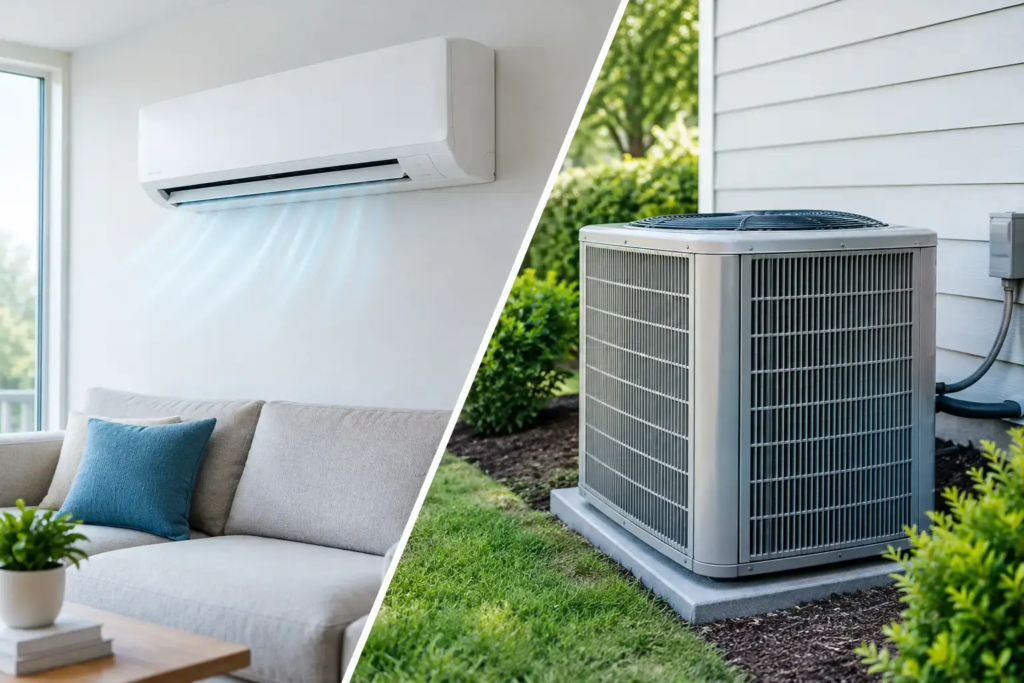
Central AC uses one outdoor unit and an indoor air handler to send conditioned air through ductwork. It is designed to cool an entire home or commercial space from a central point. Most South Florida houses with existing ducts already use this setup.
A ductless mini split uses an outdoor condenser connected to one or more indoor air handlers. Each indoor unit serves a specific room or zone and has its own temperature control. A single-zone mini split may cool one bedroom, garage conversion, or office, while a multi-zone system can serve several rooms.
Central AC is often the practical choice for whole-home replacement when the ducts are in good condition. Mini splits are especially useful when ducts are missing, inaccessible, undersized, or when a certain area has different comfort needs from the rest of the property.
When Central AC Makes More Sense
A properly designed central system delivers consistent comfort throughout a home with one thermostat or a coordinated zoning setup. For a family living in most rooms of the house, that simplicity is valuable. Bedrooms, hallways, kitchens, and living areas can receive balanced airflow without adding a visible indoor unit to each space.
Central AC also works well for larger homes and commercial buildings that already have a functional duct system. Reusing sound, properly sized ducts can reduce installation disruption compared with mounting multiple wall units and running refrigerant lines to each location.
Whole-home airflow and filtration
A central system moves air through a shared return and supply network. That makes it easier to use a whole-home filtration solution, manage ventilation, and address indoor air quality concerns at the system level. For households dealing with dust, pet dander, or frequent allergy symptoms, the condition of the ductwork, filter setup, and return-air design deserve as much attention as the equipment itself.
This does not mean central systems are automatically cleaner. Dirty ducts, leaking ducts, and neglected filters can reduce performance and distribute contaminants. Regular maintenance and duct cleaning when appropriate help protect airflow, efficiency, and indoor comfort.
A cleaner look in finished spaces
Many homeowners prefer central AC because the equipment is largely out of sight. The air handler may be in a closet, garage, or attic, while the supply registers blend into ceilings, walls, or floors. With mini splits, each zone needs an indoor head, cassette, or concealed unit. Wall-mounted heads are compact, but they remain part of the room’s visual design.
Central AC may also be easier to coordinate in buildings that need a uniform appearance, such as professional offices, rental properties, and certain retail spaces.
When a Mini Split Is the Better Answer
Mini splits solve problems that central AC cannot always solve economically. A room addition with no duct access, an enclosed patio, a detached office, a converted garage, or a bonus room that never stays comfortable are common examples. Extending existing ductwork to these areas can be expensive and may strain a system that was not sized for the added load.
Because each indoor unit has its own control, mini splits provide true room-by-room temperature management. Someone can keep a home office cool during the day without cooling unused bedrooms to the same setting. In a commercial setting, a server room, private office, or small after-hours workspace may benefit from independent cooling.
Zoning can reduce wasted cooling
The strongest advantage of a mini split is targeted comfort. If only part of the building is occupied, you can condition that area instead of relying on one thermostat for the entire property. Many mini split systems also use inverter-driven compressors that adjust output rather than cycling at full capacity every time cooling is needed.
Those features can lower energy use, but savings are not guaranteed. Running several zones at low temperatures all day can erase much of the advantage. Efficiency depends on equipment selection, insulation, thermostat settings, maintenance, and how the space is actually used.
Ductless installation avoids duct losses
Leaky or poorly insulated ducts can waste cooled air before it reaches the room. This is especially common with ductwork in hot attics. Since mini splits deliver cooling directly into the zone, they avoid those distribution losses.
However, ductless does not mean maintenance-free. Indoor heads need regular filter cleaning, drain lines need attention, and outdoor equipment needs clear airflow. A clogged condensate drain in South Florida’s humid climate can create water damage concerns just as it can with a central system.
Humidity Control Is the South Florida Deciding Factor
Temperature is only part of comfort. A home at 74 degrees can still feel uncomfortable when indoor humidity stays high. Both central AC and mini splits remove moisture as they cool, but proper sizing and runtime are critical.
An oversized central AC system can cool the home too quickly and shut off before it removes enough humidity. An oversized mini split zone can create a similar problem. On the other hand, an undersized system may run constantly and still struggle during the hottest afternoons.
A professional load calculation should consider square footage, ceiling height, window exposure, insulation, occupancy, appliances, and air leakage. In South Florida, it should also account for moisture load. Choosing equipment based only on the size of the old unit or a quick square-foot estimate is a common route to uneven comfort and higher operating costs.
For homes with persistent humidity issues, the solution may include duct repairs, improved ventilation, thermostat adjustments, drainage corrections, or a dedicated dehumidifier. Replacing the AC alone is not always the complete answer.
Installation Cost and Long-Term Value
The upfront cost of mini splits and central AC varies widely because every property is different. A single-zone mini split can be a cost-effective solution for one difficult room. A multi-zone ductless system serving an entire house can become a significant project, particularly when several indoor units, electrical upgrades, and long refrigerant line runs are required.
Central AC replacement is often more straightforward when existing ducts, electrical service, and equipment locations are usable. But if ducts are damaged, poorly designed, contaminated, or too small for the new system, those issues should be corrected rather than hidden behind new equipment.
When comparing estimates, look beyond the model name and price. Ask what is included for electrical work, permits, drainage, thermostat controls, duct modifications, startup testing, and warranty support. The lowest quote can become costly if it leaves airflow, moisture, or code requirements unresolved.
Questions to Ask Before You Choose
Before selecting either system, consider how the space is used. Are certain rooms consistently warmer? Is the building occupied evenly throughout the day? Are the existing ducts sealed and sized correctly? Do you need better filtration for the whole property, or independent cooling for one space?
Also consider future plans. A homeowner planning an addition may benefit from a dedicated mini split for the new area. A property owner replacing an aging whole-home system may get better value from central AC improvements, including duct sealing and balanced returns. Some properties benefit from both: central AC for the main living areas and a mini split for an addition, garage, or isolated office.
Choose the System That Solves the Actual Problem
There is no single winner in the mini split versus central AC comparison. Central AC is often the strongest whole-building option when quality ductwork already exists and consistent, unobtrusive cooling is the goal. Mini splits offer excellent flexibility for additions, hard-to-cool rooms, and spaces that need independent temperature control.
The right recommendation starts with an on-site evaluation, not a standard equipment package. Premier Cooling LLC evaluates layout, airflow, insulation, duct condition, and comfort goals before recommending a solution. With licensed and insured technicians, more than 1,200 customers served, and 24/7/365 availability, the focus is on dependable cooling that fits your property.
If one room is muggy, a whole floor is uneven, or your current system is nearing replacement, have the cause identified before choosing the equipment. The best cooling investment is the one that keeps the people in your space comfortable through the next South Florida summer, not merely the one with the highest efficiency label.
