

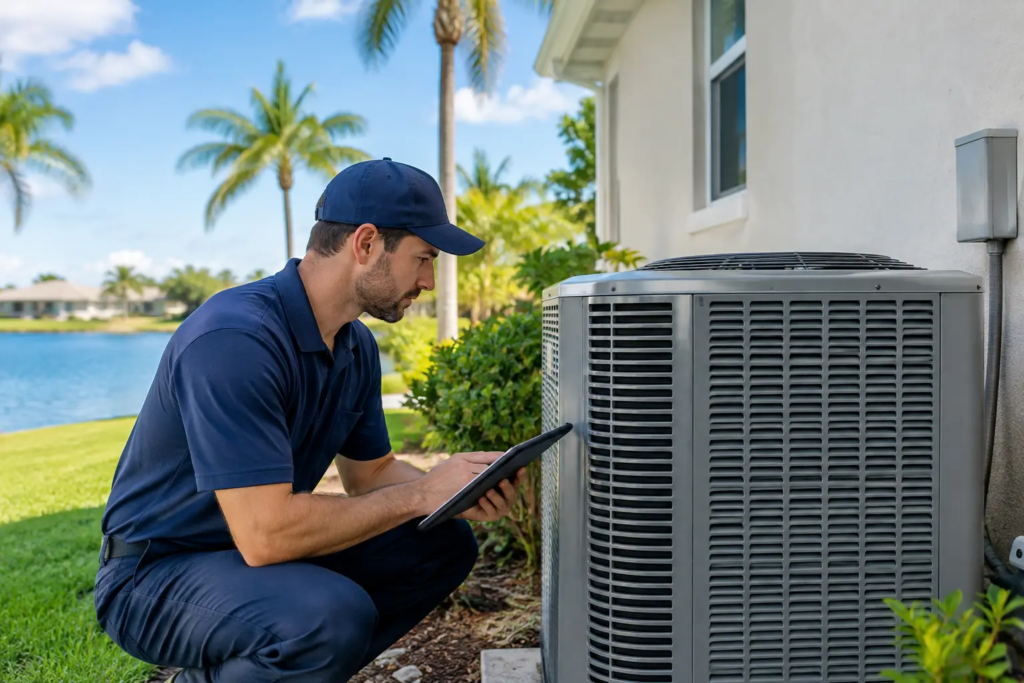
A 2,000-square-foot South Florida home does not automatically need the same air conditioner as another 2,000-square-foot home down the street. AC sizing for Florida homes depends on much more than square footage, especially when high humidity, intense sun, duct conditions, and family routines all affect the cooling load.
Buying a system that is too small can leave rooms warm, drive up energy use, and put extra strain on the equipment. Buying one that is too large can be just as frustrating. An oversized AC may cool the thermostat area quickly, then shut off before it has removed enough moisture from the air. The result can be a home that feels cold, clammy, and unevenly cooled.
Why AC Size Matters So Much in South Florida
Air conditioner capacity is commonly measured in tons. One ton equals 12,000 BTUs of cooling capacity per hour. That measurement is useful, but it should not be treated as a quick shopping formula.
Broward County and the wider South Florida market create demanding conditions for cooling equipment. Long stretches of heat, strong afternoon sun, high outdoor humidity, and frequent door traffic all add heat and moisture to a home. A system must do more than lower the temperature. It must also remove humidity at a pace that keeps indoor comfort under control.
That is why a properly sized system often feels better than a bigger system. Correct sizing supports longer, steadier cooling cycles during hot weather. Those cycles give the indoor coil time to pull moisture from the air while distributing conditioned air through the home.
The Square-Footage Rule Is Only a Starting Point
Homeowners often hear rough estimates such as one ton of cooling for every 400 to 600 square feet. These estimates may be useful for a general conversation, but they are not reliable enough to select a new system.
For example, a well-insulated 1,800-square-foot home with modern windows, shade trees, and a tight building envelope may need less cooling capacity than an older 1,500-square-foot home with leaky ducts, west-facing glass, and poor attic insulation. A high ceiling, enclosed patio, converted garage, or second-story bonus room can change the calculation as well.
Square footage cannot reveal where heat enters the home, how efficiently air moves through the ducts, or how much humidity the system must manage. Using it as the final answer can lead to years of discomfort and unnecessary operating costs.
Factors That Change the Right AC Size
A proper recommendation looks at the full house rather than a single number. The most influential details include:
- The home’s square footage, ceiling heights, and open or closed floor plan
- Window size, orientation, shading, and glass efficiency
- Attic insulation levels, roof exposure, and wall construction
- Number of occupants, cooking habits, and heat-producing appliances
- Duct size, duct leakage, return-air capacity, and room-by-room airflow
- Existing hot spots, humidity concerns, and thermostat location
Even the way a family uses the home matters. A household where someone works from home all day, cooks frequently, or keeps several bedrooms occupied may have different cooling needs than a home that is empty most weekdays.
Right-Sized vs. Oversized: The Humidity Difference
In Florida, humidity is often the deciding factor between a house that merely reaches the set temperature and one that feels genuinely comfortable.
An oversized air conditioner may satisfy the thermostat quickly. Because it runs in short cycles, it may not remove enough moisture. Indoor humidity can remain elevated, making 74 degrees feel warmer than expected. You may notice sticky air, a musty odor, condensation near vents, or rooms that feel cold for a few minutes and uncomfortable soon after.
Short cycling also puts wear on components. Starting an AC system requires more effort than continuing a normal cooling cycle, so repeated starts and stops can contribute to avoidable stress over time.
A properly sized system is not necessarily the largest available option. It is the system matched to the home’s actual cooling and moisture load. In some homes, that may mean choosing a variable-speed system that can run at lower capacity for longer periods. These systems can offer excellent humidity control, but they still need correct sizing, proper ductwork, and careful installation to perform as intended.
Why an HVAC Load Calculation Is the Better Answer
The most reliable way to choose replacement equipment is a professional load calculation, commonly called a Manual J calculation. This process estimates how much heating and cooling a specific home needs based on construction, insulation, windows, orientation, local climate, occupancy, and other details.
The calculation should be paired with an evaluation of the duct system. A correctly sized condenser cannot solve problems caused by undersized returns, crushed flex duct, major leaks, or poor supply-air distribution. If one bedroom is always hot while the rest of the house is comfortable, the issue may be airflow rather than total system capacity.
A qualified technician should also review the equipment match. The outdoor unit, indoor air handler or furnace, evaporator coil, thermostat, refrigerant setup, and duct system must work together. Replacing only one part without confirming compatibility can reduce efficiency and compromise comfort.
Signs Your Current System May Be the Wrong Size
Some symptoms can point to an improperly sized unit, although they can also be caused by maintenance issues, refrigerant problems, duct leakage, or failing parts. A professional inspection helps separate the possibilities.
A system may be too small if it runs almost continuously during normal summer heat and still cannot maintain the thermostat setting. Other signs include warm rooms, weak airflow, high utility bills, and difficulty cooling the home after the doors have been opened frequently.
A system may be too large if it cycles on and off every few minutes, leaves the home humid, creates noticeable temperature swings, or cools the central living area while bedrooms remain uncomfortable. Oversizing is particularly common when a contractor bases replacement capacity only on the old equipment. The existing unit may have been wrong from the day it was installed.
Keep in mind that an aging system can lose capacity as parts wear and coils become dirty. Before assuming the unit is undersized, have it inspected. A clean coil, proper refrigerant charge, clear drain line, good filter, and healthy blower performance all affect real-world cooling output.
Planning an AC Replacement Without Guesswork
When it is time to replace an air conditioner, bring useful information to the estimate appointment. Recent electric bills, recurring comfort complaints, previous repair records, and details about additions or renovations can help the technician understand the home faster.
Be ready to discuss whether you have changed windows, added attic insulation, enclosed a patio, replaced a roof, or converted a garage into living space. Each improvement can change the load. If you are planning upgrades soon, such as new impact windows or additional insulation, mention those plans before the system is selected.
It is also reasonable to ask how the recommended size was determined. A clear answer should go beyond “this is what you had before” or “this is what most homes your size use.” You should understand the capacity recommendation, the efficiency options, any ductwork concerns, and what the equipment is expected to do for humidity control.
Premier Cooling LLC evaluates layout, airflow, insulation, and energy goals before recommending equipment, helping homeowners avoid one-size-fits-all replacement decisions. Licensed and insured technicians can identify whether the right next step is repair, maintenance, duct improvement, or a properly sized new system.
Comfort Is a Whole-Home Calculation
The right AC size should leave your home consistently cool, reasonably dry, and balanced from room to room without wasting energy. It should not rely on setting the thermostat unusually low just to feel comfortable, and it should not leave you choosing between high bills and humid air.
If your current system struggles, cycles constantly, or never seems to make every room comfortable, treat that as useful information rather than something you simply have to live with. A careful load calculation and airflow assessment can turn a replacement project into a long-term comfort improvement for your Florida home.
