

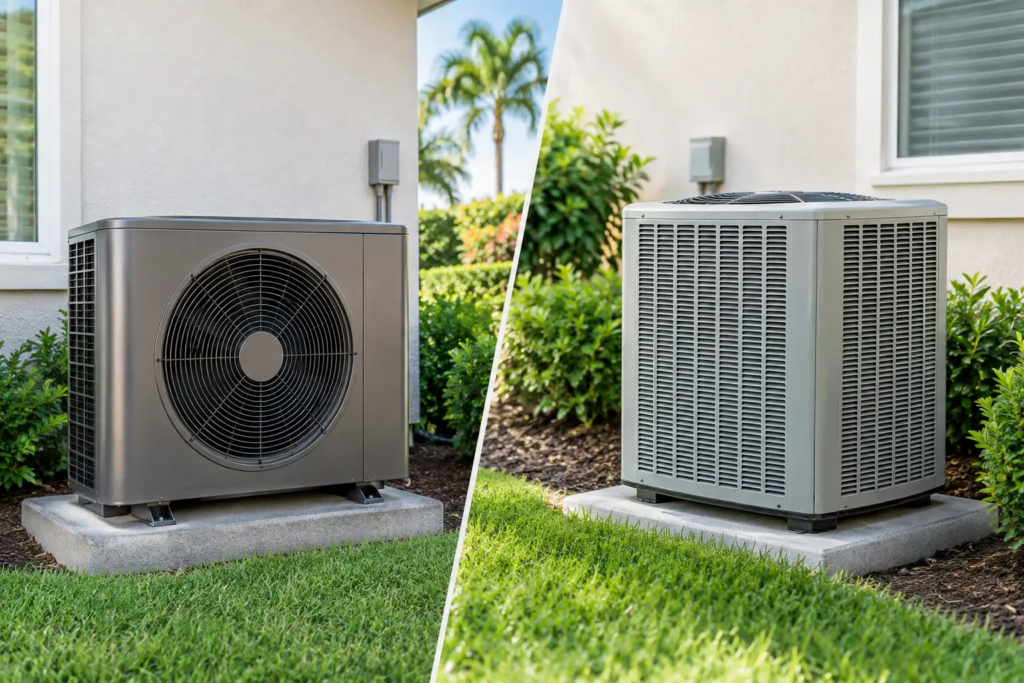
A South Florida air conditioning system may run for most of the year, often through long stretches of heat, humidity, and afternoon storms. That is why a heat pump versus AC in Florida is not simply a question of whether you want heat. The better choice depends on how your property handles humidity, how often you use heat, the condition of your ductwork, your energy goals, and the quality of the installation.
For many Broward County homes and businesses, either system can provide dependable cooling. The difference is in what happens when temperatures dip, how the equipment is sized and configured, and whether the system is designed around the building instead of treated as a one-size-fits-all replacement.
Heat Pump Versus AC in Florida: The Main Difference
A central air conditioner moves heat out of your home to cool it. It is paired with an indoor air handler or furnace, depending on the setup. When heat is needed, a standard AC system relies on a separate heating source, often electric heat strips in South Florida.
A heat pump uses a similar refrigeration process to cool your property, but it can reverse that process to bring heat indoors during cooler weather. In cooling mode, a heat pump functions much like a conventional central AC. In heating mode, it pulls available heat from the outdoor air and transfers it inside.
That reversible operation is the key difference. Because South Florida winters are generally mild, a heat pump can often provide efficient heat without depending as heavily on electric resistance heat. For a homeowner who runs the heat a few mornings each winter, that may be useful. For someone who rarely turns on heat, it may be less decisive.
Cooling Performance Is Usually Comparable
A common misconception is that a heat pump cannot cool as well as a dedicated air conditioner. In Florida, a properly selected heat pump can cool a home or commercial space just as effectively as a comparable central AC system. Both can be available in high-efficiency models, including variable-speed options designed for longer, lower-output operation.
What matters more than the label on the outdoor unit is system design. An oversized system may cool the air quickly but shut off before it removes enough moisture. That can leave rooms feeling cool yet clammy, create uneven temperatures, and contribute to indoor comfort complaints.
A system that is too small may run continuously in peak summer weather and struggle to maintain the set temperature. Proper sizing requires more than matching the capacity of the old unit. A licensed technician should consider square footage, ceiling height, window exposure, insulation, occupancy, equipment load, duct condition, and airflow throughout the property.
Humidity Control Deserves Special Attention
Humidity is where many Florida replacement decisions go wrong. Your air conditioner or heat pump does not just lower temperature. It also removes moisture as warm indoor air passes over the cold evaporator coil.
A variable-speed heat pump or AC system can help with humidity because it may run longer at lower capacity rather than cycling on and off at full speed. Longer run times can improve moisture removal and reduce temperature swings. Still, variable-speed equipment is not automatically the right fit for every building. The ducts, thermostat controls, refrigerant setup, and installation quality all need to support the equipment.
If rooms feel muggy even when the thermostat reads 72 degrees, the issue may involve oversized equipment, poor airflow, leaking ducts, a dirty coil, or indoor air infiltration. Replacing equipment without identifying the underlying cause can repeat the same problem with a newer system.
Heating in South Florida: Where a Heat Pump Has an Edge
When outdoor temperatures fall, a heat pump generally costs less to operate than electric heat strips because it transfers heat rather than creating it through resistance. That is an advantage in Fort Lauderdale, Miami, West Palm Beach, and surrounding communities where the heating season is short but still noticeable on cooler nights.
During an unusual cold snap, a heat pump may use auxiliary electric heat to maintain comfort or recover temperature quickly. This is normal. It does not mean the unit has failed. The goal is to make sure auxiliary heat is configured properly so it supports the system when needed without running unnecessarily.
A conventional AC system with electric heat strips can still be a sensible choice, especially when the property already has compatible equipment and heating use is minimal. But when comparing similar efficiency levels, a heat pump often offers more year-round capability for a modest difference in upfront cost.
Upfront Cost, Efficiency, and Long-Term Value
The purchase price of a heat pump can be somewhat higher than a comparable AC-only system, though the difference varies by equipment type, capacity, electrical requirements, and installation scope. If an older system needs duct repairs, a new air handler, electrical upgrades, or drainage improvements, those items may affect the total project cost more than the choice between a heat pump and an AC condenser.
Efficiency ratings matter, but they should not be viewed in isolation. Higher SEER2 equipment can reduce energy use, particularly when an older, inefficient unit is being replaced. However, the savings depend on how much the system runs, how well the building is sealed, thermostat habits, duct leakage, maintenance, and local electric rates.
For a property that cools nearly every day, investing in better cooling efficiency may provide a meaningful return. For a rental unit, vacation property, or small office with modest use, a dependable mid-efficiency system may make more financial sense. The right recommendation should match the property’s operating needs, not just chase the highest rating available.
When a Heat Pump Makes Sense
A heat pump is often a strong choice for South Florida homeowners who want cooling and efficient mild-weather heating from one system. It can be especially practical when replacing both an aging outdoor unit and air handler, when electric heat is already part of the setup, or when the goal is to improve year-round efficiency.
It may also be a good fit for commercial spaces that need consistent comfort during early morning, evening, or seasonal temperature changes. Offices, retail spaces, and multi-unit properties benefit when occupants do not have to deal with a separate heating solution or unpredictable temperature control.
A standard central AC system can still be the right call when heating demand is extremely limited, the existing configuration favors AC replacement, or the budget is best directed toward needed duct, airflow, or indoor air-quality improvements. There is no benefit to buying more equipment capability than the property will realistically use.
Installation Quality Can Matter More Than Equipment Type
Even premium equipment cannot overcome poor installation. Refrigerant charge, condensate drainage, electrical connections, duct sealing, return-air sizing, and thermostat setup all affect comfort, efficiency, and equipment life.
In South Florida, condensate management is particularly important. High humidity creates substantial moisture removal, and a blocked or poorly installed drain line can lead to water damage, system shutdowns, and indoor air concerns. Duct leakage can also pull hot, humid attic air into the system, making rooms harder to cool and increasing energy use.
Before replacing a system, ask for an evaluation of airflow and duct condition along with the equipment recommendation. If the old system failed early, ran constantly, had repeated drain issues, or left certain rooms uncomfortable, those details should shape the replacement plan.
Questions to Ask Before Choosing
Start with practical questions: How often do you use heat? Are any rooms consistently warmer or more humid than others? Is your current system properly sized, or has it short-cycled since it was installed? Are your ducts clean, sealed, and delivering balanced airflow?
Also ask what efficiency level fits your expected length of ownership. A family planning to stay in the home for many years may value variable-speed comfort and long-term utility savings differently than an owner preparing a property for sale. Commercial decision-makers should consider operating hours, occupant comfort, maintenance access, and the cost of downtime.
Premier Cooling LLC helps South Florida property owners compare these options with recommendations based on the building, not a standard equipment package. Licensed and insured technicians can evaluate cooling performance, humidity concerns, airflow, and heating needs before presenting clear replacement options.
The best next step is not choosing a heat pump or AC from a brochure. It is having the property evaluated while the symptoms of the old system are still clear, so the new equipment is selected to keep the people inside comfortable through the heat, humidity, and occasional cold front.
