

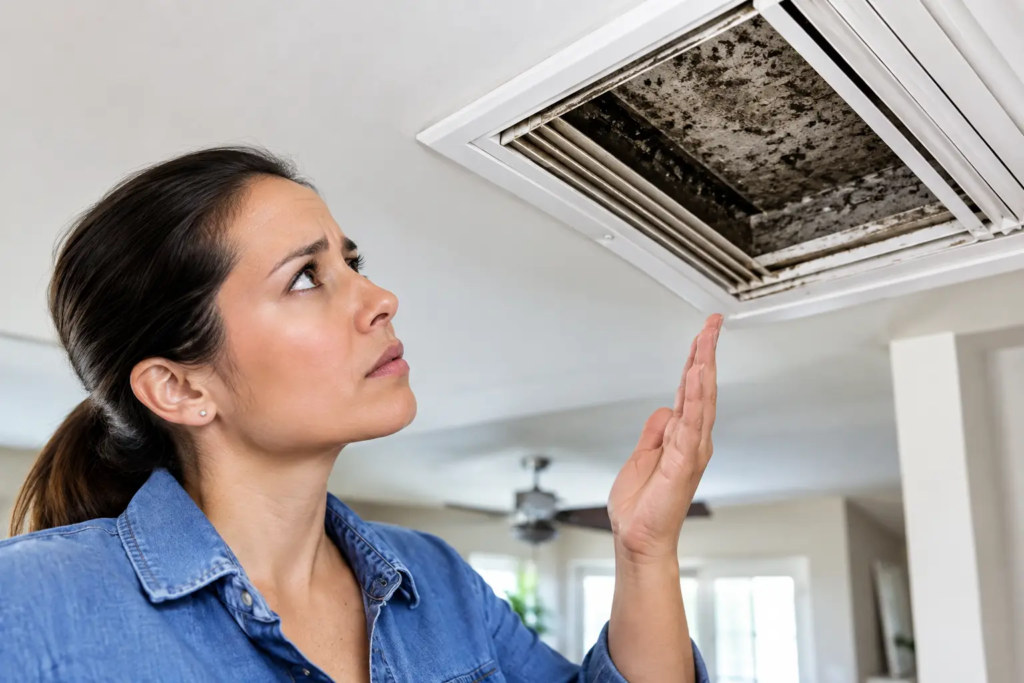
A musty smell that returns every time the AC turns on is one of the most common signs of moldy air ducts. In Broward County and across South Florida, AC systems often run for long hours while pulling moisture from warm, humid air. That makes moisture control especially important. Still, an odor or a dusty vent does not automatically mean mold is growing inside your ductwork. The goal is to identify the source, correct the moisture issue, and avoid spending money on cleaning that will not solve the problem.
Why Mold Can Develop in Air Ducts
Mold needs moisture, a food source such as dust or organic debris, and enough time to grow. Duct interiors are usually dark and can collect dust, but they should not stay damp. When they do, the HVAC system deserves a closer look.
In South Florida, common moisture sources include oversized AC equipment that cools quickly without removing enough humidity, clogged condensate drains, poorly insulated ducts in hot attics, air leaks, and wet insulation around the air handler. A dirty evaporator coil or restricted filter can also affect airflow and allow moisture to linger where it should not.
Not every dark spot in a vent is mold. It may be ordinary dust, staining, insulation fibers, or residue from past moisture. A qualified inspection is the sensible way to distinguish between a cosmetic concern and an active indoor air-quality problem.
9 Signs of Moldy Air Ducts
1. A persistent musty or earthy odor
A damp, basement-like odor when the system starts or while it is running should not be ignored. The smell may come from ducts, the evaporator coil, drain pan, air handler insulation, or a hidden water issue near the equipment. If the odor disappears when the AC is off and returns with airflow, the HVAC system is a likely place to investigate.
2. Visible growth around supply vents or registers
Spots that look fuzzy, speckled, greenish, black, or white around a vent cover can be concerning, especially if they return after cleaning. Condensation on cold metal registers can create a small area of repeated moisture. Before assuming the entire duct system is contaminated, a technician should check for high indoor humidity, insulation gaps, and air leaks around the boot behind the register.
3. Condensation on vents, ducts, or nearby ceilings
Water droplets on supply registers are not normal in a properly balanced system. Condensation can form when humid indoor air reaches a cold surface. It can also point to damaged duct insulation, poor sealing, excessive indoor humidity, or airflow problems.
Ceiling stains near vents deserve prompt attention as well. They may be caused by roof leaks or plumbing issues rather than HVAC, but either way, moisture should be addressed quickly before mold has time to spread.
4. Indoor humidity that stays high
Most homes are generally more comfortable when indoor relative humidity stays around 40% to 60%. If rooms feel clammy, windows fog, towels take too long to dry, or a humidity monitor regularly reads above 60%, mold-friendly conditions may be present.
High humidity does not prove there is mold in the ducts. It does mean the AC system may not be removing moisture effectively. The cause could be equipment sizing, thermostat settings, short cycling, duct leakage, or an issue with the system’s drainage or cooling components.
5. Recurring dust or dark debris near vents
A light layer of dust around registers is common. Thick buildup that returns soon after cleaning may indicate dirty ducts, a leaky return pulling air from an attic or wall cavity, or a filter that is not fitted correctly. Dark debris alone is not a reliable mold test, but it is a reason to inspect the system and improve filtration if needed.
6. Allergy-like symptoms that improve away from the building
Sneezing, coughing, irritated eyes, throat irritation, or congestion can have many causes, including seasonal pollen, pet dander, dust mites, cleaning products, and outdoor air pollution. If several occupants notice symptoms mainly at home or in one area of a commercial building, it is worth looking at indoor air conditions.
This sign requires care. HVAC contractors do not diagnose medical conditions, and symptoms alone cannot confirm mold. Anyone with severe respiratory concerns, asthma, or immune-system risks should speak with a medical professional while the property owner investigates potential moisture and air-quality sources.
7. A history of water damage or HVAC drain problems
Past water events matter. A backed-up condensate line, overflowing drain pan, roof leak, plumbing leak, or flood can leave moisture inside insulation, duct liners, wall cavities, or the air handler. Even after the visible water is gone, damp materials can continue supporting microbial growth.
If the system has had repeated drain line clogs, ask for the drain pan, float switch, evaporator area, and surrounding insulation to be inspected. Clearing the line is necessary, but finding out why it repeatedly clogs can prevent another problem.
8. Weak airflow or rooms that feel unusually humid
Weak airflow is not a direct mold sign, but it can contribute to conditions mold prefers. Restricted filters, dirty coils, damaged ducts, and disconnected runs can reduce the system’s ability to circulate and dehumidify air properly. A bedroom that stays warm and damp while the rest of the home feels fine may have an airflow or duct problem that needs targeted diagnosis.
9. Growth found on the coil, drain pan, or inside the air handler
Mold-like growth discovered near the evaporator coil, drain pan, blower compartment, or return plenum should be evaluated professionally. These areas handle condensation and can affect the air distributed throughout the property. Cleaning should be paired with correction of the moisture source. Otherwise, the same conditions can return after service.
What to Do If You Suspect Mold
Start with the simple checks: replace a dirty HVAC filter with the correct size and rating, look for water around the indoor unit, and note when odors or condensation occur. Do not spray bleach, fragrance products, or unapproved chemicals into vents. These products can damage components, create unpleasant fumes, and mask the real source without resolving it.
Next, schedule an HVAC inspection. A thorough visit should look beyond the visible vent cover. The technician should assess the air handler, evaporator coil, drain pan and line, filter fit, duct condition, insulation, airflow, and indoor humidity. If substantial contamination or a hidden building moisture issue is suspected, additional remediation or specialized testing may be appropriate.
Duct cleaning can help when dust, debris, or confirmed contamination is present, but it is not a cure-all. Cleaning ducts while leaving a leaking return, wet insulation, clogged drain, or humidity problem in place is a short-term fix. The best outcome comes from cleaning the affected areas and correcting the conditions that allowed growth in the first place.
Prevention Matters in South Florida
Preventive maintenance is often the most practical defense. Keep filters changed on schedule, have condensate drains checked, address water leaks quickly, and make sure attic ductwork is sealed and insulated. If your home regularly feels damp, ask whether your equipment is sized and operating correctly for your layout, occupancy, insulation, and South Florida humidity.
For commercial properties, routine inspections are especially valuable because tenant comfort, employee health concerns, and operating interruptions can escalate quickly. Facilities teams should document odors, leaks, humidity readings, and affected rooms so a technician can identify patterns instead of treating isolated symptoms.
If you notice musty odors, vent condensation, recurring moisture, or visible growth, acting early can protect your comfort and help prevent a small HVAC issue from becoming a larger indoor air-quality repair. Premier Cooling LLC can inspect the system, explain what is found in clear terms, and recommend the right next step for your home or business.
